Amusement Park
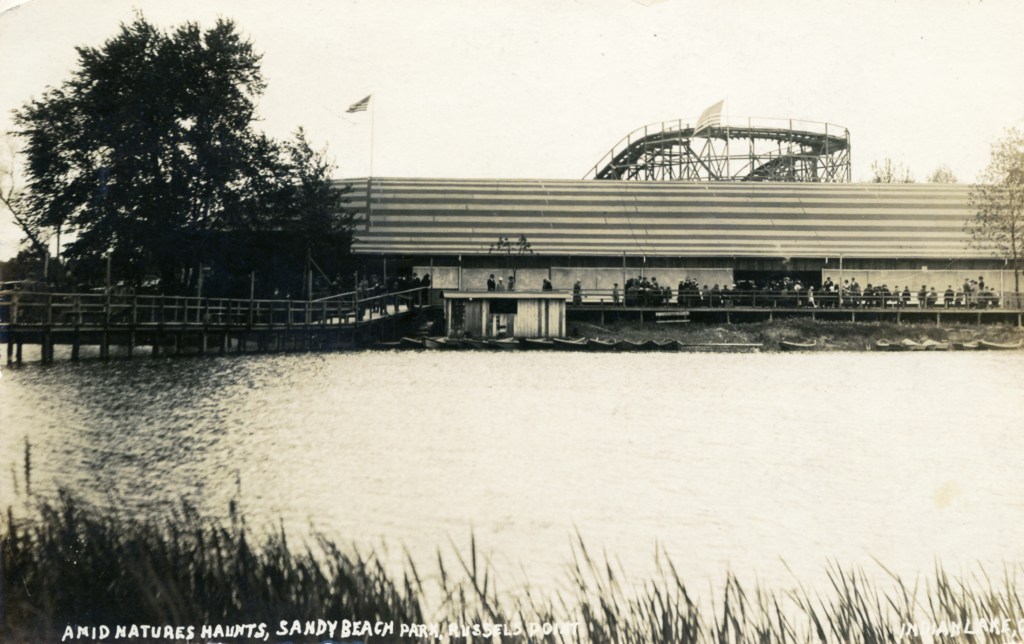
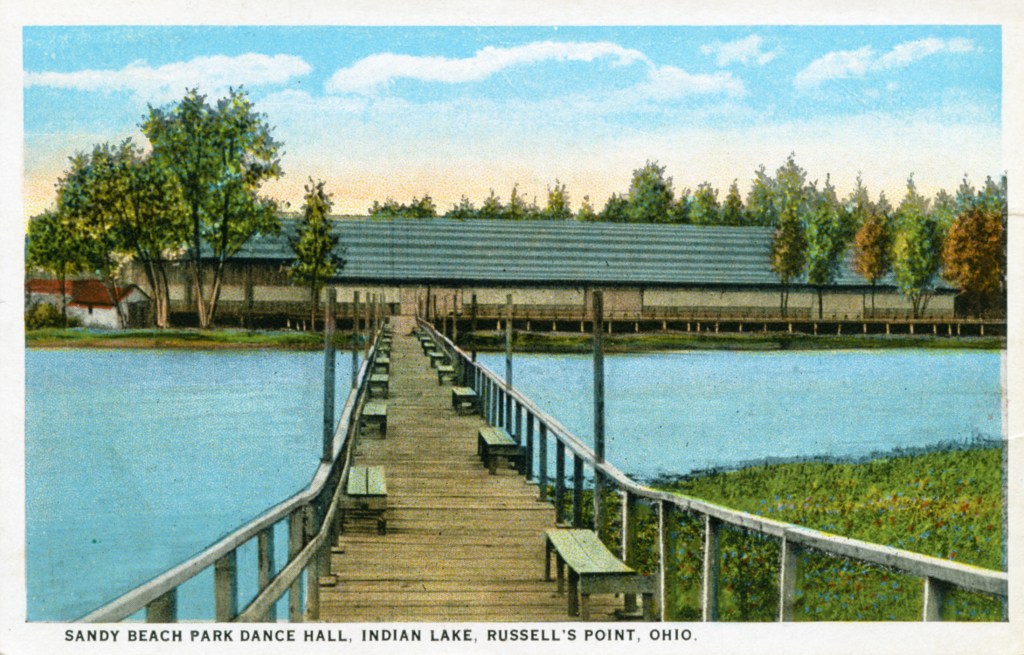
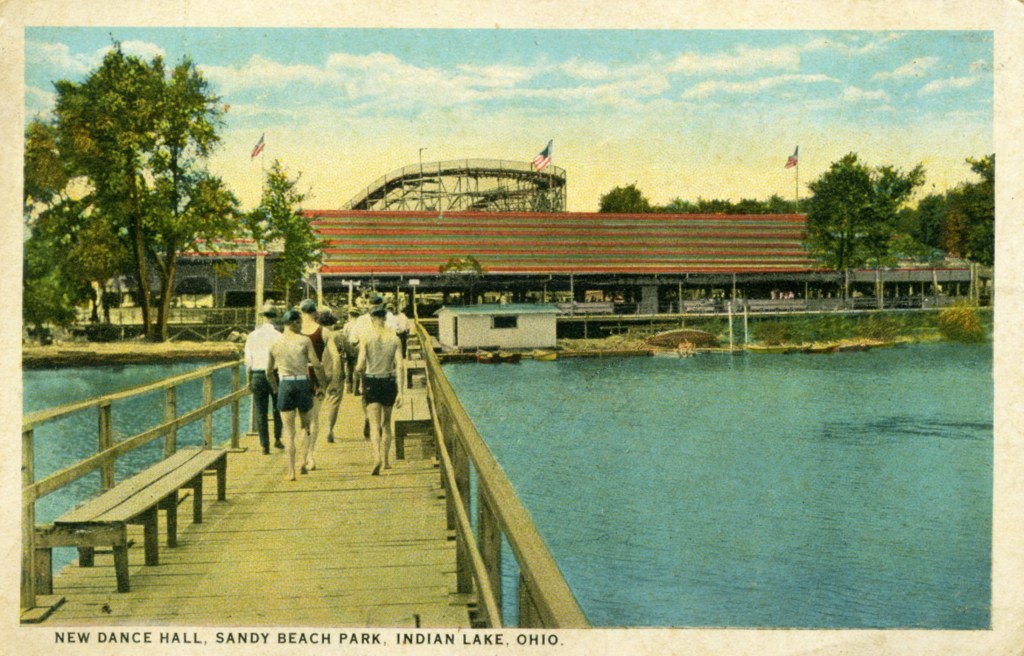
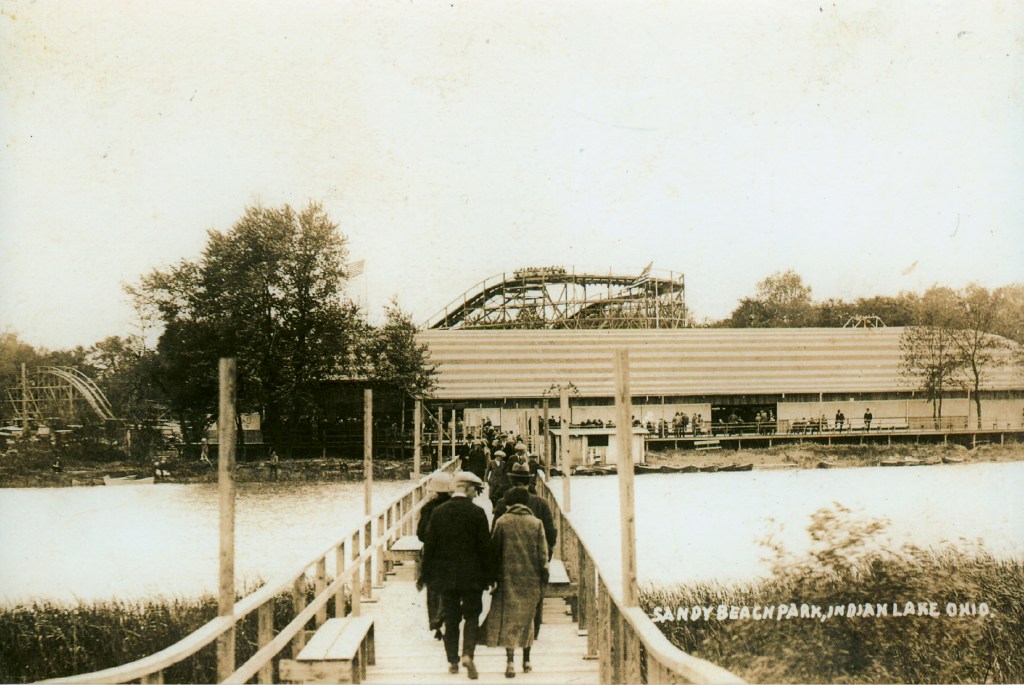
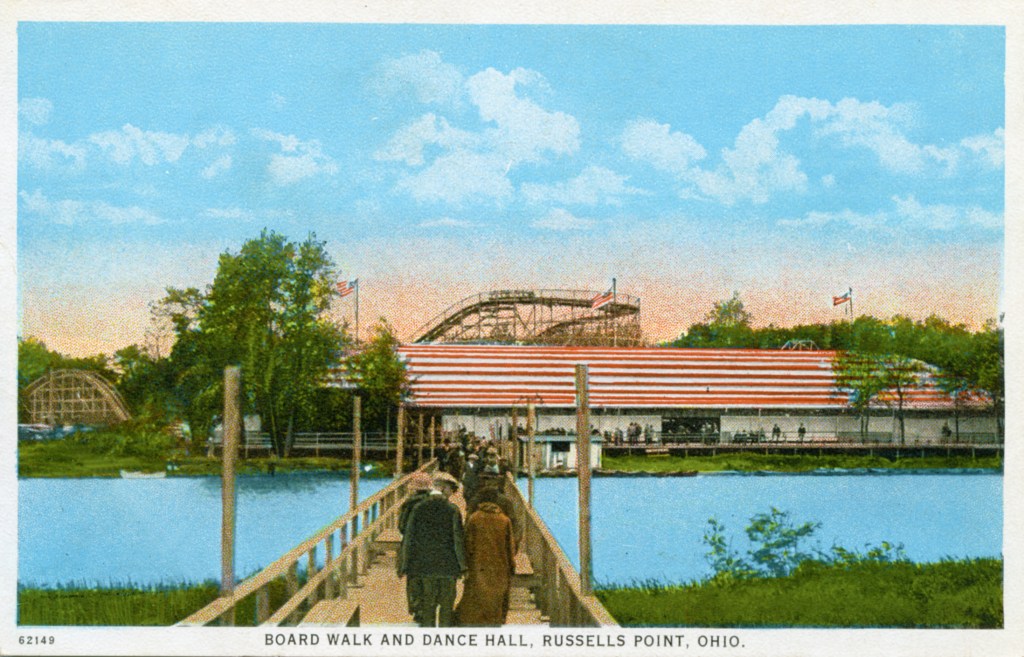
Footbridge going south from Sandy Beach to the New Dance Hall on the mainland. The roller coaster towers above the dance hall. Before this footbridge was build, vacationers had to take one of the excursion boats to Sandy Beach Island.
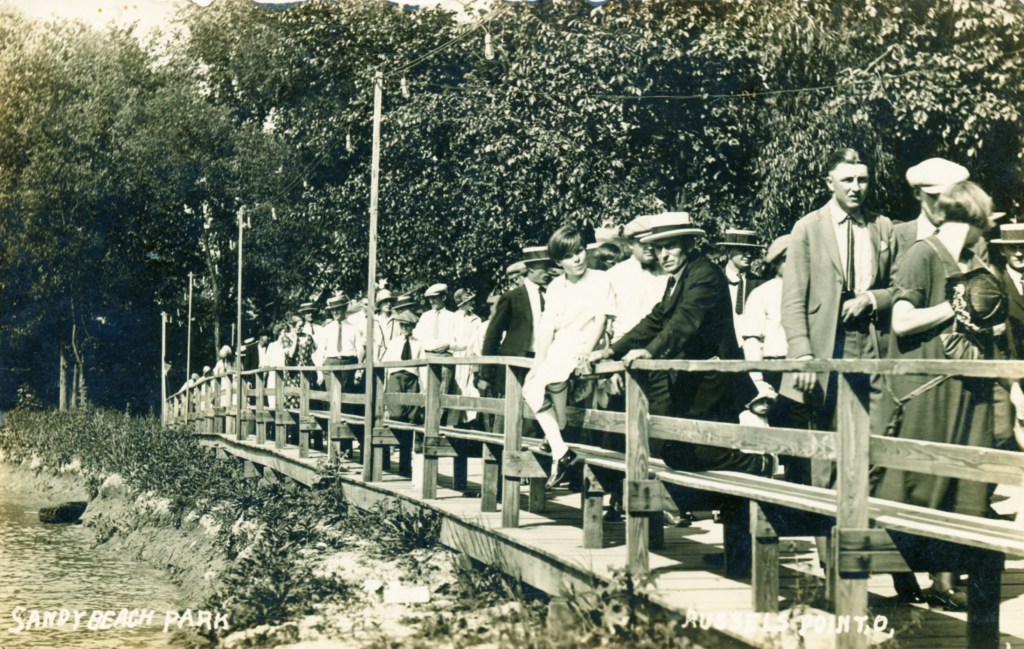
The Minnewawa Dance Hall was built in 1923-1924 by Elmer Katzmeyer, at a cost of $50,000. With its length of two hundred and sixty-two feet, and width of eighty-two feet, it was one of the largest dance halls in the state. The roof was supported by laminated arches, each prominently displaying the name of a city or town to facilitate tourists finding one another at the arch of their town. On many nights, two bands would play, alternating after a few songs each.
On Saturday, September 21, 1935, a spectacular fire raged across the Amusement Park, destroying the large dance hall, and burning practically all nearby concessions. The flames started in the northeast corner of the dance pavilion at 9:15 p.m., and quickly engulfed the dance hall, which had been remodeled just the past summer, as well as several rides, including the Old Mill and roller coaster. The dance hall had been closed since Labor Day, two weeks before the fire erupted. A crowd of more than 10,000 spectators watched the fire, the cause of which remains a mystery.
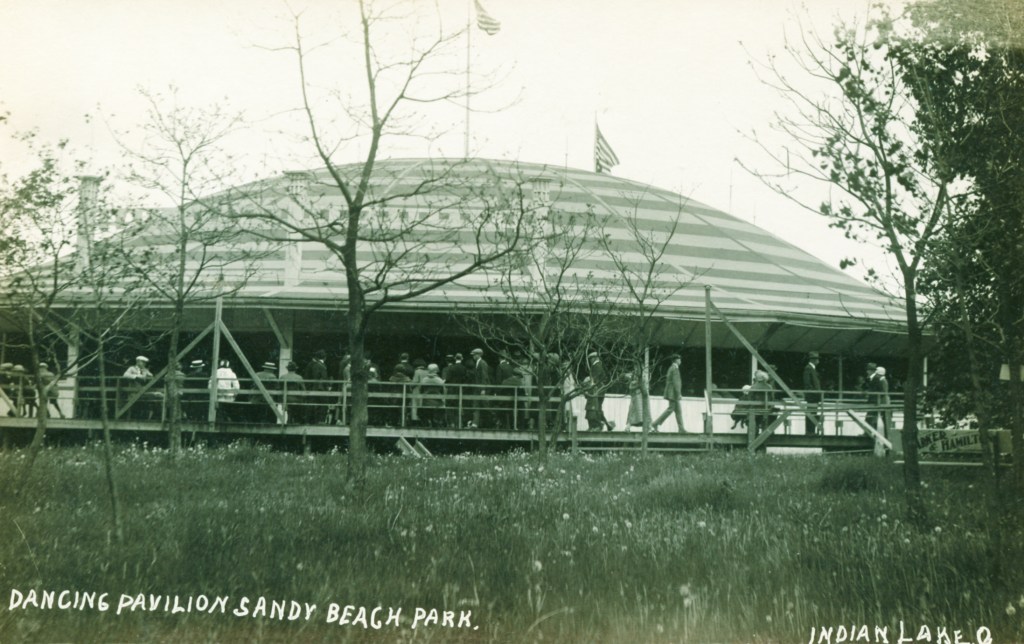
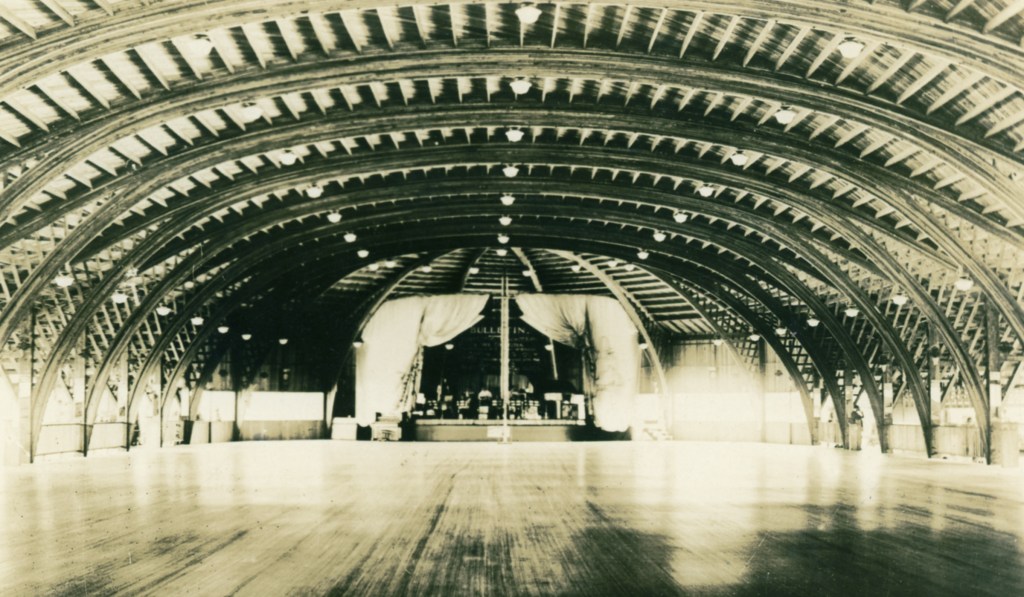
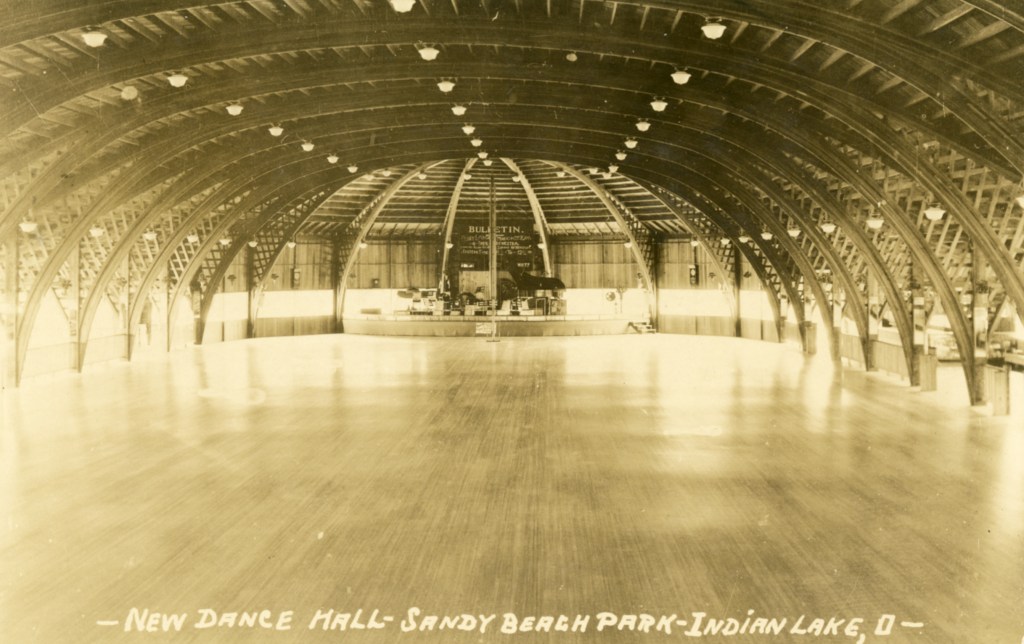
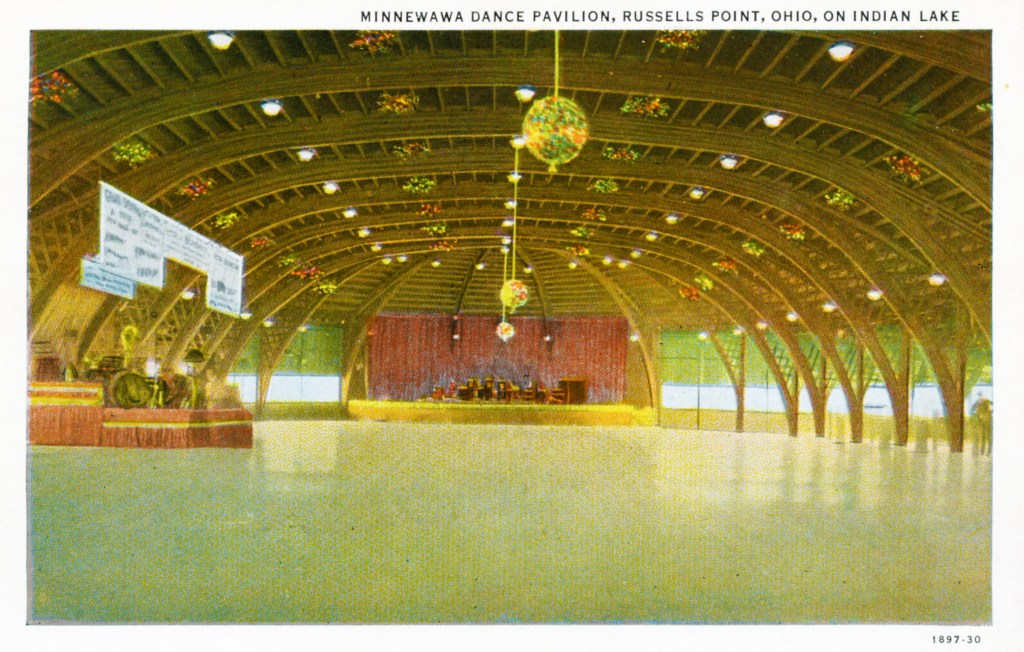

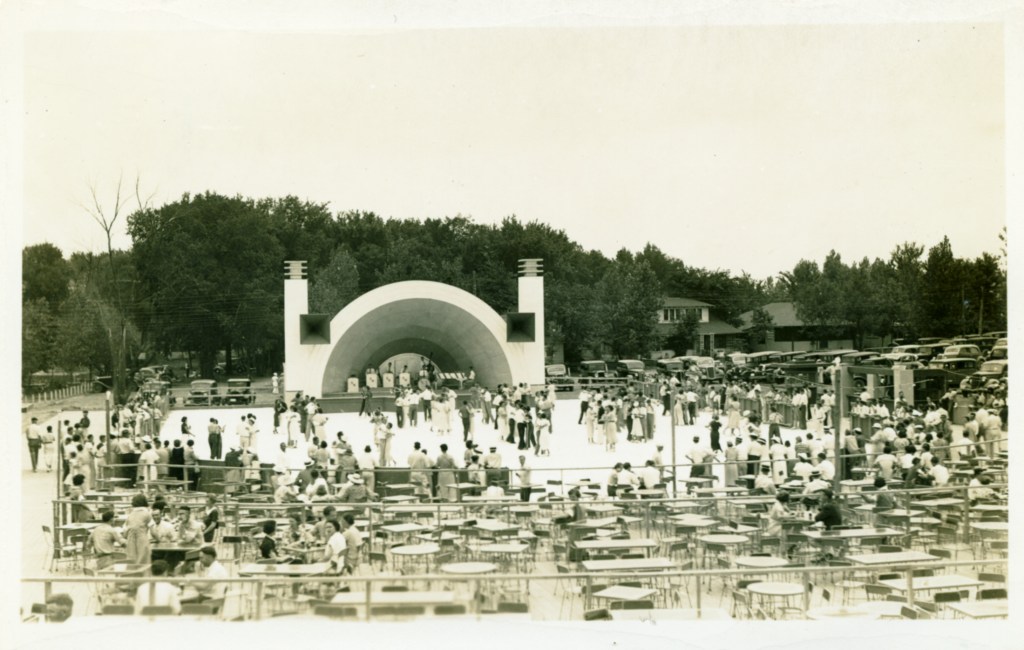
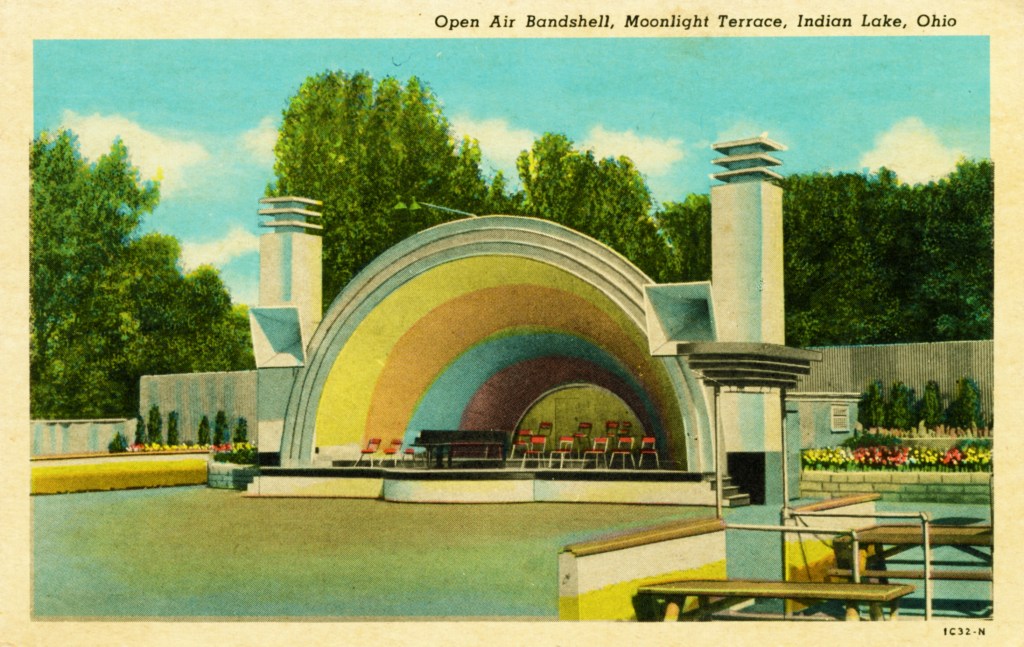
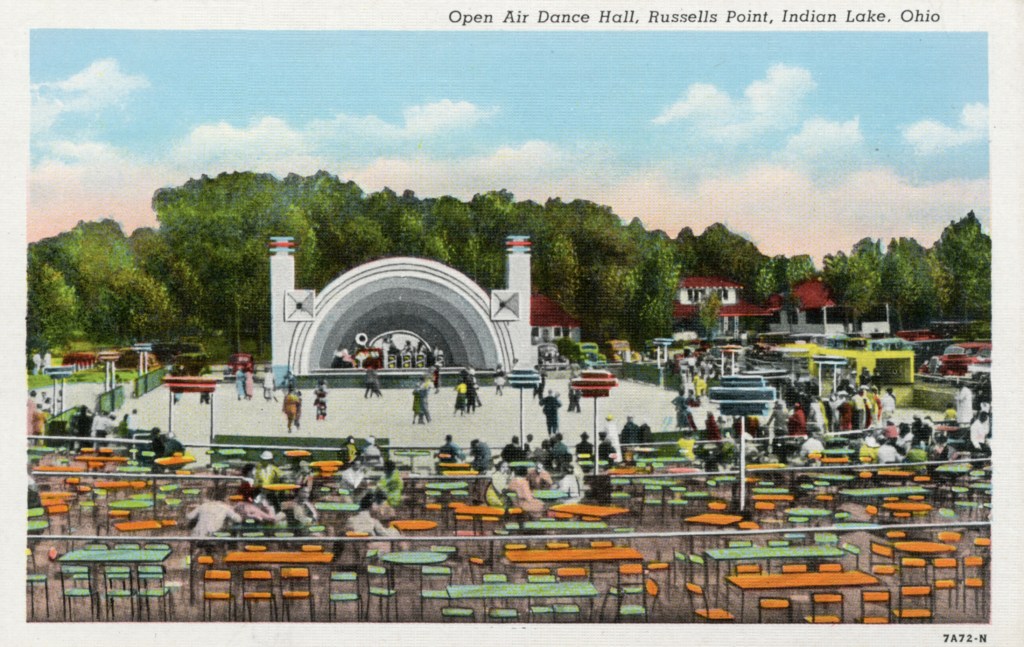
Following the fire in 1935, the Wilgus family sold their interests in the Sandy Beach Amusement Park, but retained the Spa Swimming Pool. Perhaps they were discouraged from rebuilding after the insurance only paid for approximately half of the total damages. The Moonlight Terrace Gardens occupied the same spot as the dance hall that burned down, and was built in 1936 by the new owners of the Amusement Park, Charles Horvath and Louis Greiner. Immediately fronting the stage was plenty of room for dancers, while seats offered solace for the more sedative crowds. The dance hall had a cement band shell and was terraced at one end for tables. Many big bands played the venue, but summer rains often resulted in cancellations.
Callum DeVillier, a hairdresser from Lanesboro, Minnesota, designed his own headstone before his death in 1973. His head-turning epitaph contains his greatest accomplishment, engraved for posterity. “DeVillier,” the red granite marker reads. “World Champion Marathon Dancer. 3780 Continuous Hours.”
In 1923, New York dance instructor and dance-a-thon patient-zero Alma Cummings exhausted an assortment of male partners as she waltzed around an Upper Manhattan ballroom for 27 hours straight. Her stunt was a tantalizing alchemy of the era’s fascinations, a test of the limits of both the human body and the nation’s new, liberalized sexuality. Within three weeks, her record was broken at least nine times across the country—from Baltimore to Cleveland to Houston. The age of the dance marathon jumped into full swing.
Enterprising promoters were quick to capitalize. If the industrial boom of the 1920s created a population of working urbanites hungry for entertainment, it also left rural Americans in increasingly dire circumstances, desperate and bored. For many, entertaining was a welcome diversion, especially if participating could mean a chance to save the farm.
Promoters took what started as a fun, voyeuristic, 1920s curiosity and turned it into a cottage industry for a country that was careening into hard times. They offered cash prizes that could be larger than a farmer’s yearly income, and formalized a system of live music (during peak hours, with phonograph records at other times), admission fees, and rules that kept marathons profitable for much longer than Cummings’s 27 hours. For a man like Callum DeVillier, fame and fortune were only remote possibilities, but attention was guaranteed. Dance marathons were a thrilling alternative to the doldrums of country life.
Contest pamphlets spelled out the rules of the individual marathons, but a few things became pretty standard. Dancers at least had to be in motion to remain in the contest. They were typically given 15 minutes of rest each hour, during which nurses rubbed their feet and provided medical attention. Food was provided many times daily, and tasks such as eating, bathing, shaving, and reading the paper could be done while dancing. Dancers could often be seen dozing off while their partners held them up to keep their knees from hitting the ground (which would result in disqualification). The scene was heavily regulated and monitored, with some promoters accompanying dancers on brief outdoor walks for a breath of fresh air before returning for more dancing. Promoters even planted professional dancers among the contestants. The windfall came from the spectators, returning night after night, cash in hand, to follow the action.
DeVillier had been making a name for himself in Minnesota’s dance marathon circuit even before the economic crisis spread nationwide. One 1928 marathon pamphlet noted that he “knocked the folks stiff at Brainerd (Minnesota) when he wobbled about the floor for 443 hours.” But desperate times called for more desperate dancing. Unemployed in 1932, DeVillier recruited his landlord’s daughter Vonnie Kuchinski to travel with him to the Boston suburb of Somerville for what turned out to be a historic event. (Boston proper could not host the contest, since the mayor had banned marathon dancing eight years earlier, after 27-year-old Homer Morehouse collapsed and died after an event.) In a theater-turned-dance-hall, DeVillier and Kuchinski performed a combination of glorified walking and intense bouts of spirited dancing every day, around the clock, from December until June. Rest time was cut from 15 minutes to three minutes per hour for the last two weeks of the contest. The unthinkably long marathon was a popular attraction, and late-night traffic from out-of-town spectators led local politicians to ban dance marathons—before the contest even ended. The final 52 hours of the marathon were danced nonstop. It’s not clear how long other competitors lasted, but on June 3, 1933, DeVillier and Kuchinski took home the $1,000 prize.
But by the mid-1930, dance marathons were already beginning to fall out of favor. Fewer and fewer people could spare the entrance fee. As the novelty wore off, the prosperity and relative liberalism of the 1920s had given way to the austerity and moralizing of the Depression. Dancing was considered a corrupting influence by some, and lawmakers across the country moved to ban the events. Promoters tried taming the contests by calling them “walkathons” (an appellation that endures today) and pursued wholesome sponsorships, but the practice was more or less gone as World War II approached. “[W]ith another World War looming … industry had revived and people were going back to work,” writes Martin. “Who had time to sit around for hours watching people move in a circle on a dance floor?”[1]
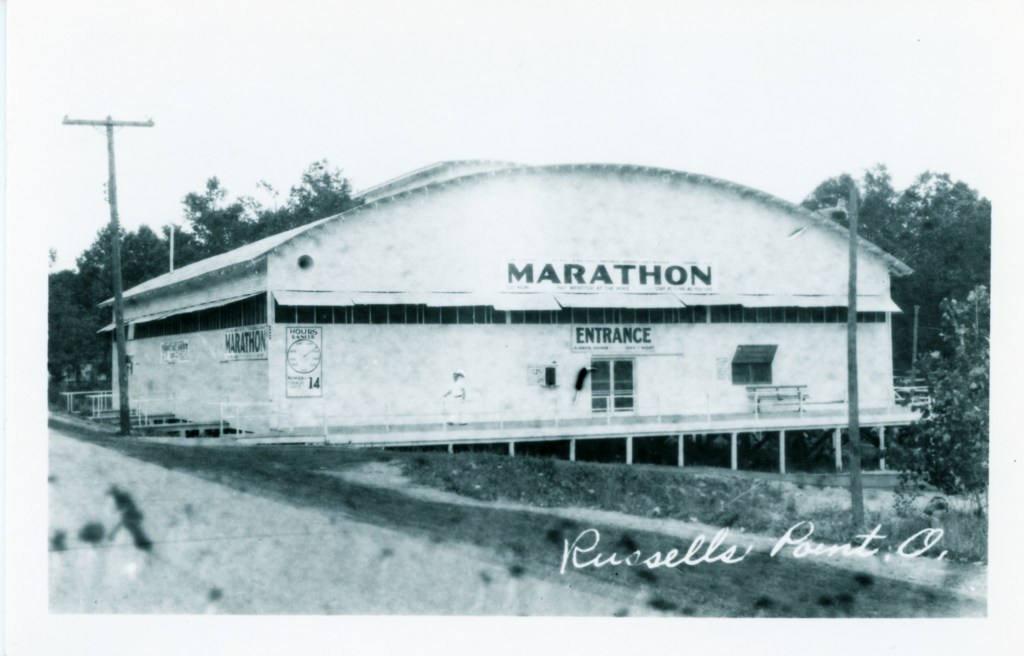
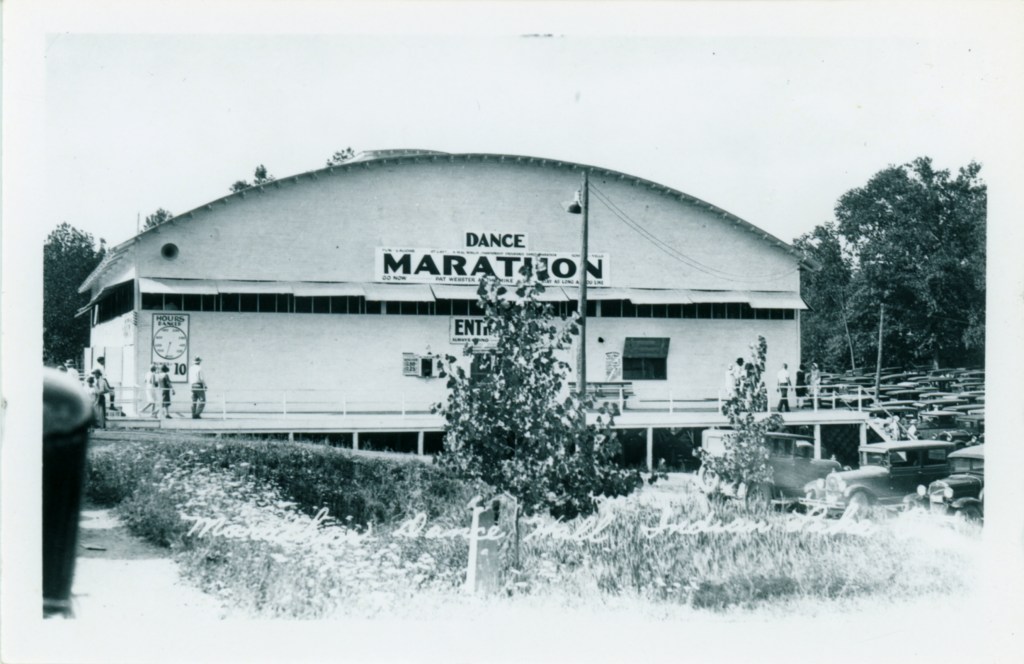
In 1931, the National Endurance Dance Marathon was held in the newly-constructed Marathon Ballroom and lasted for 80 days and 2 hours (two-and-a-half month). Mary Rock Fite from Chicago, and a local fellow from Russells Point named Charles Murray, were the winners of the 1931 dance marathon. After the marathon craze passed in the mid-1930s, the building on the site of the amusement park was closed and returned to the Wilgus family. The building was moved to the other side of the harbor and renamed Danceland.
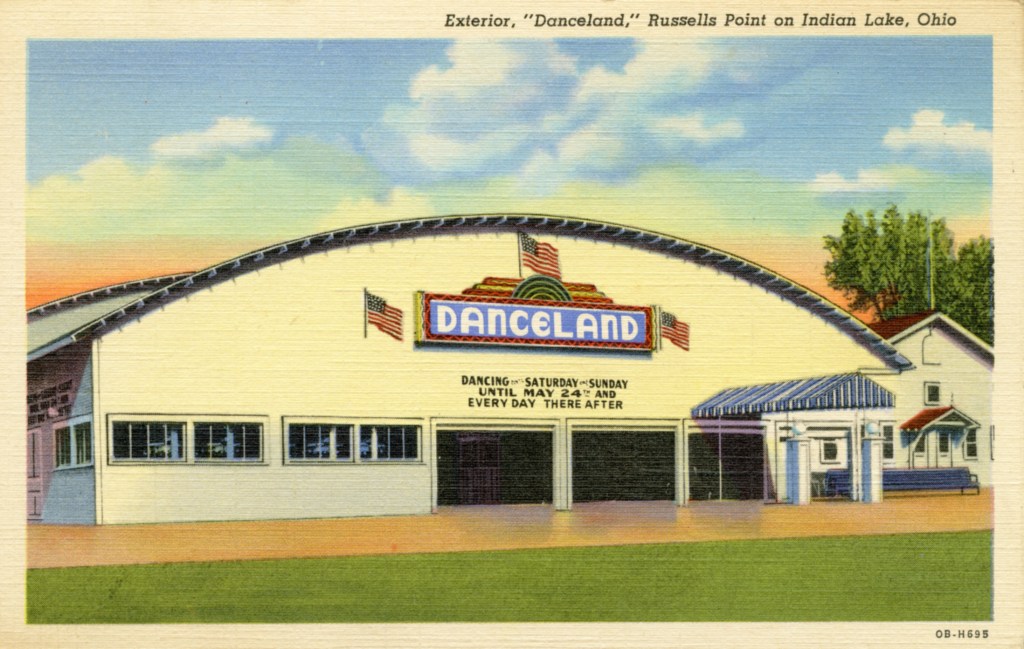

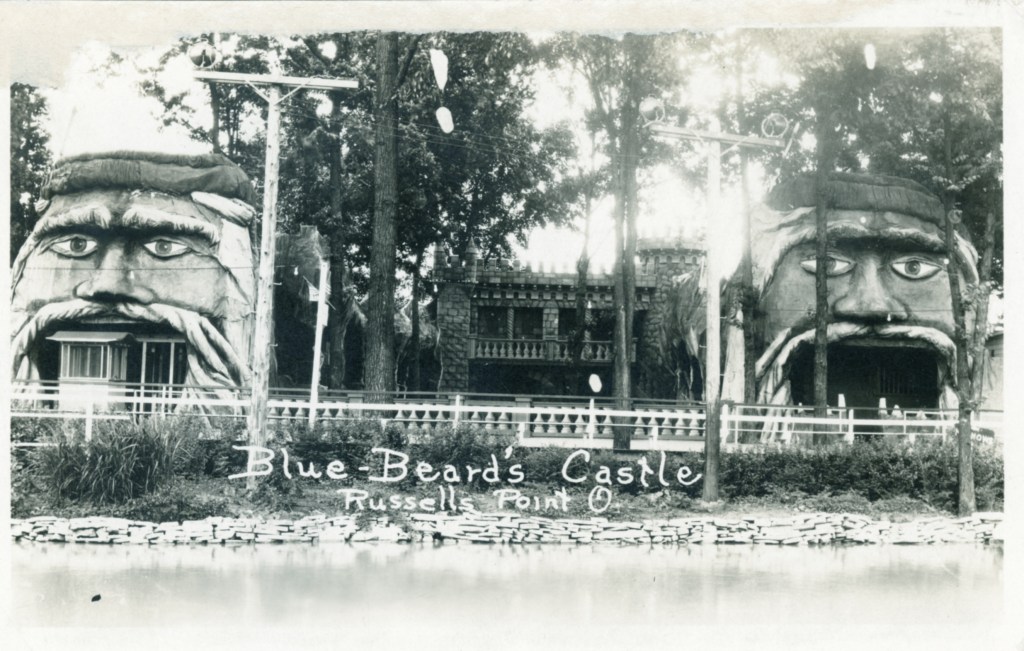
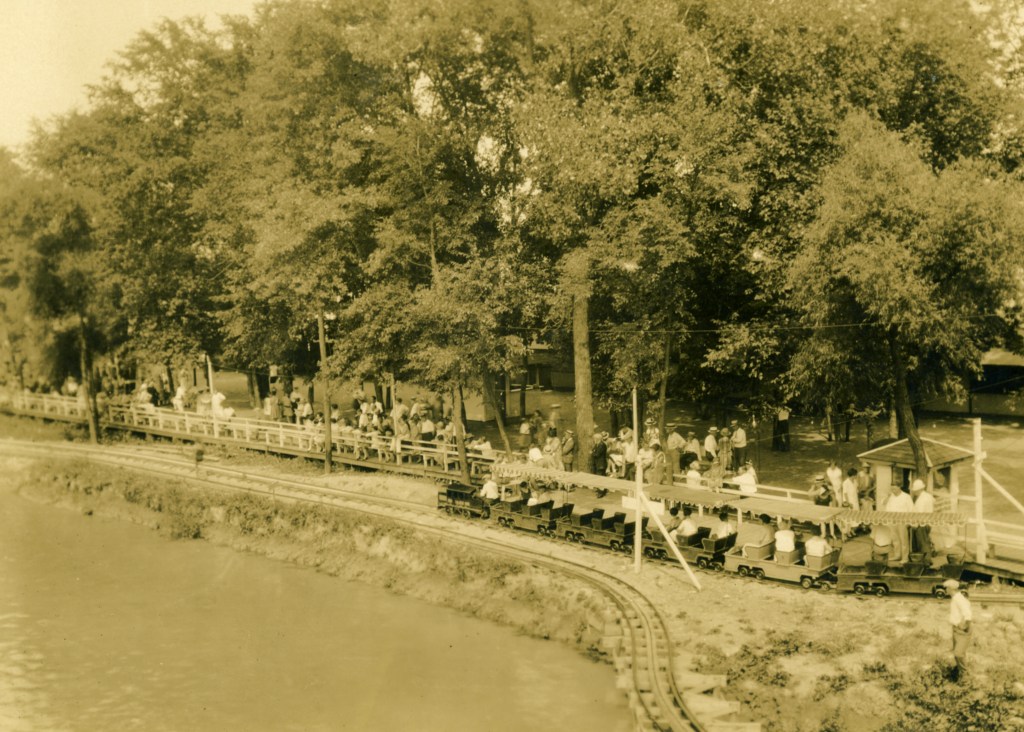
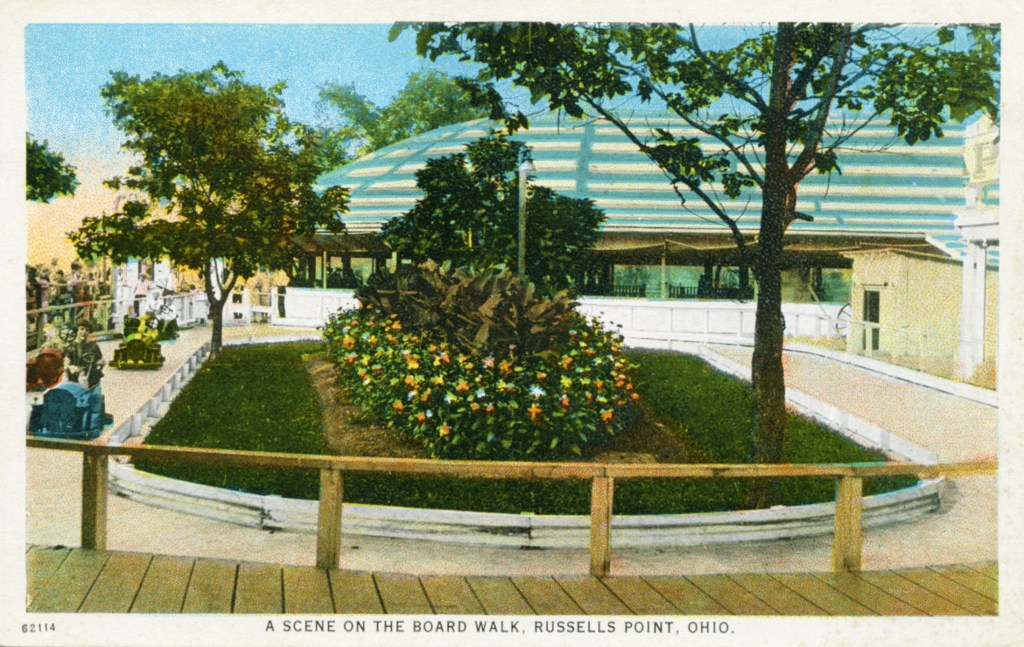
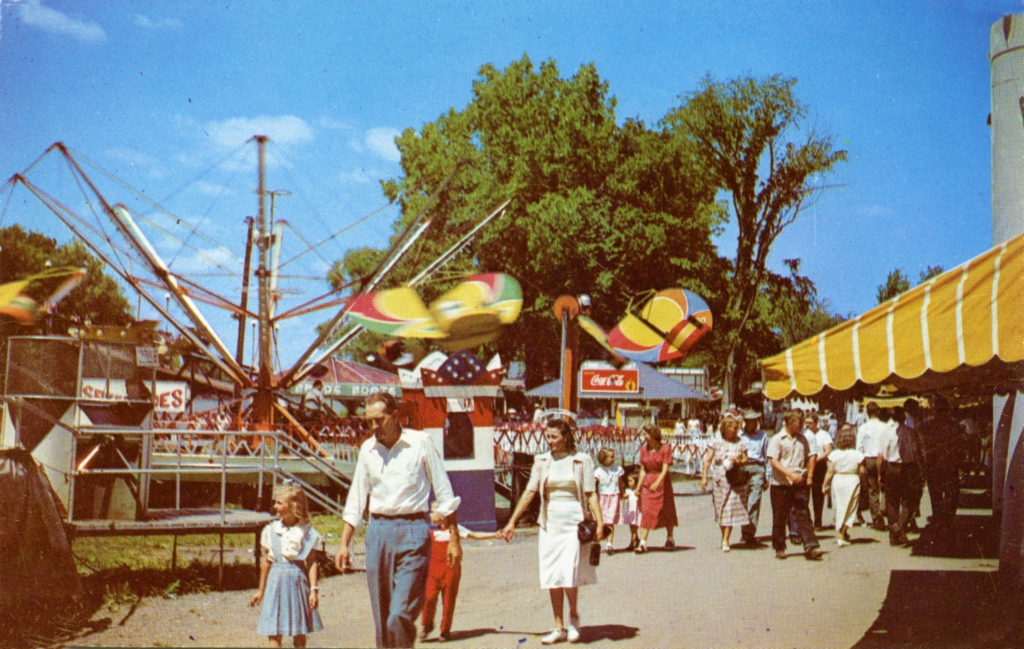
There are few postcards showing the actual amusement park, other than scenes on the board walk or the Minnewawa Dance Hall and its successor. These four cards are the only ones in my possession. The card in the lower right dates from the 1960s, judging by the way people are dressed.
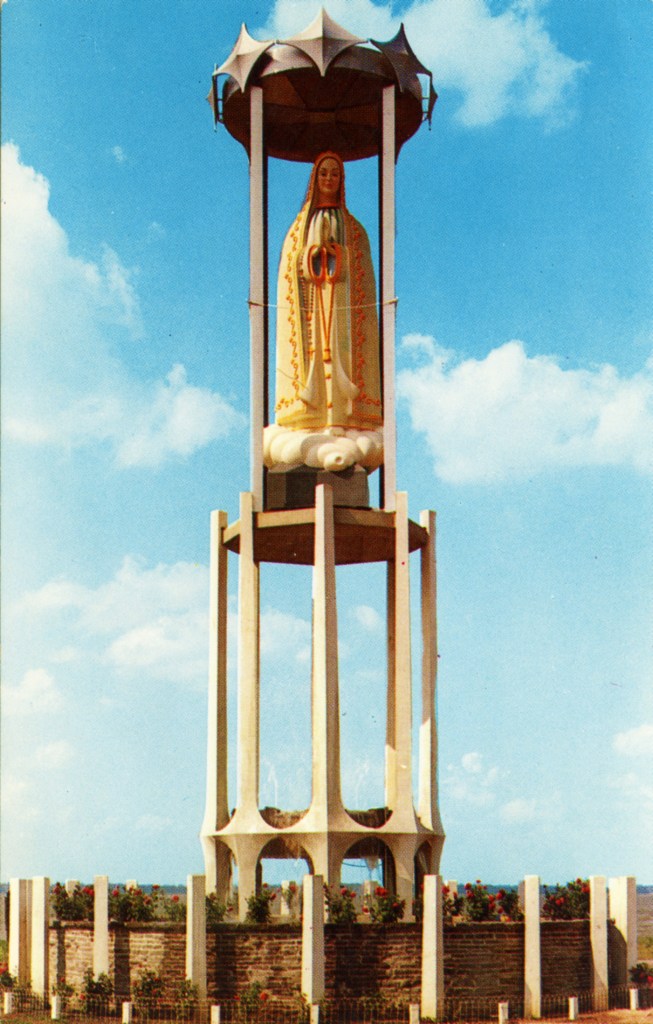
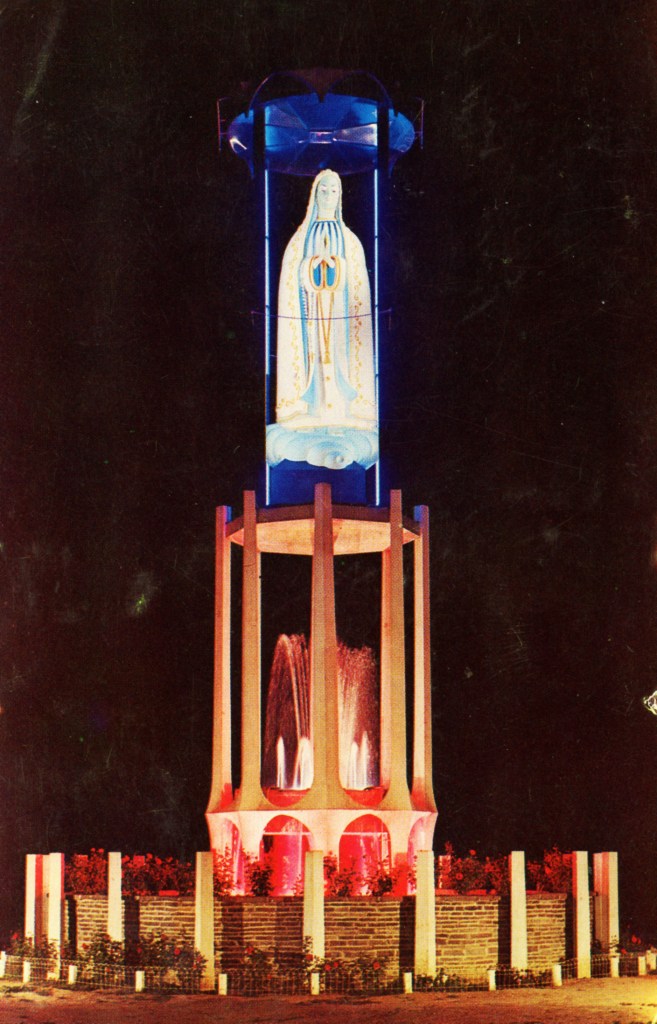
In 1958, George Quatman became owner of the Sandy Beach Amusement Park, renaming it the San Juan Park. Mr. Quatman, a telephone company owner from Lima, had previously purchased the properties on the west side of the harbor, including the hotel. Both sides together now constituted the San Juan Resort. Mr. Quatman was a devout Catholic who did not permit alcoholic beverages to be sold on the premises of the Resort. In 1963, he had a statue of Our Lady of Fatima erected in the park. The nineteen feet and six inches statue was sculpted and then cast out of fiberglass in Florida. Upon completion, the statue was shipped to Ohio and mounted atop a twenty-three feet six inches high concrete pedestal. Mary’s robes were painted blue and white, trimmed in gold, with fluorescent paint that came alive under controlled black lighting. The statue included fourteen changes of fountain scenes and eighteen changes of color. The statue was dedicated in August, 1964, and is the only surviving artefact of the San Juan Park. George Quatman passed away one month after dedication of the statue.
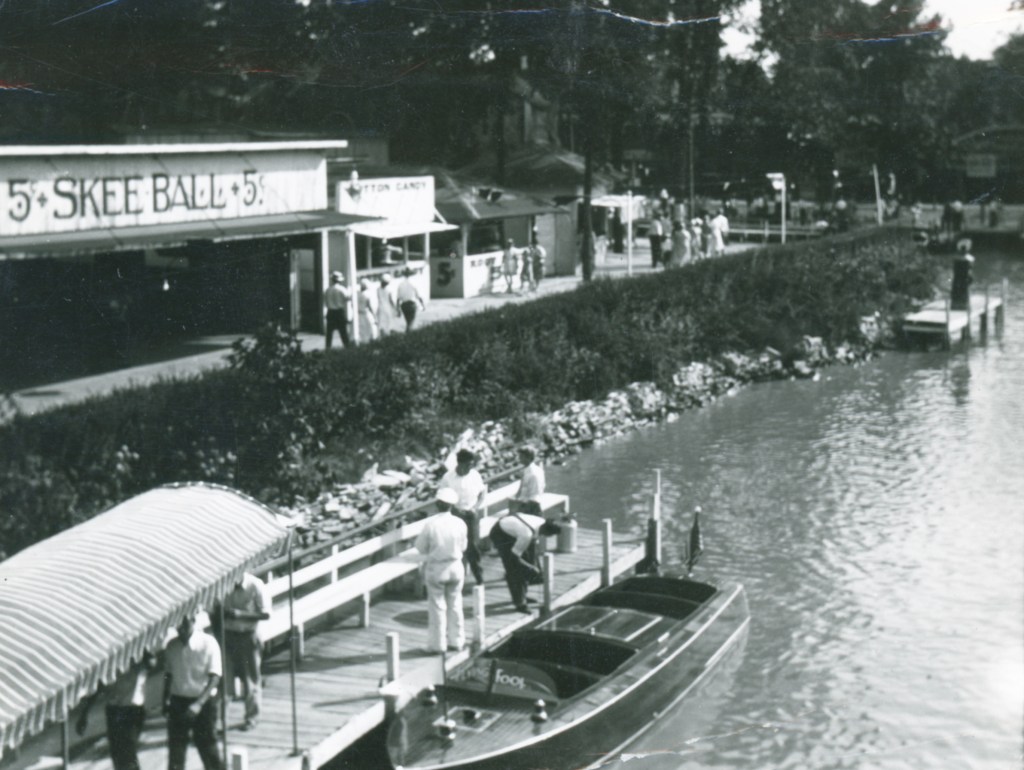

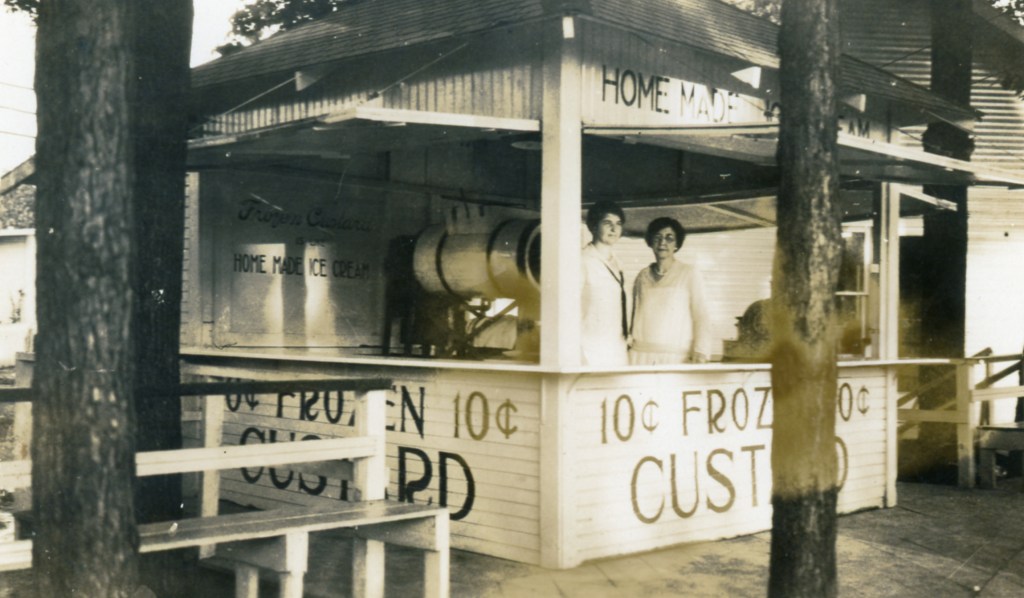

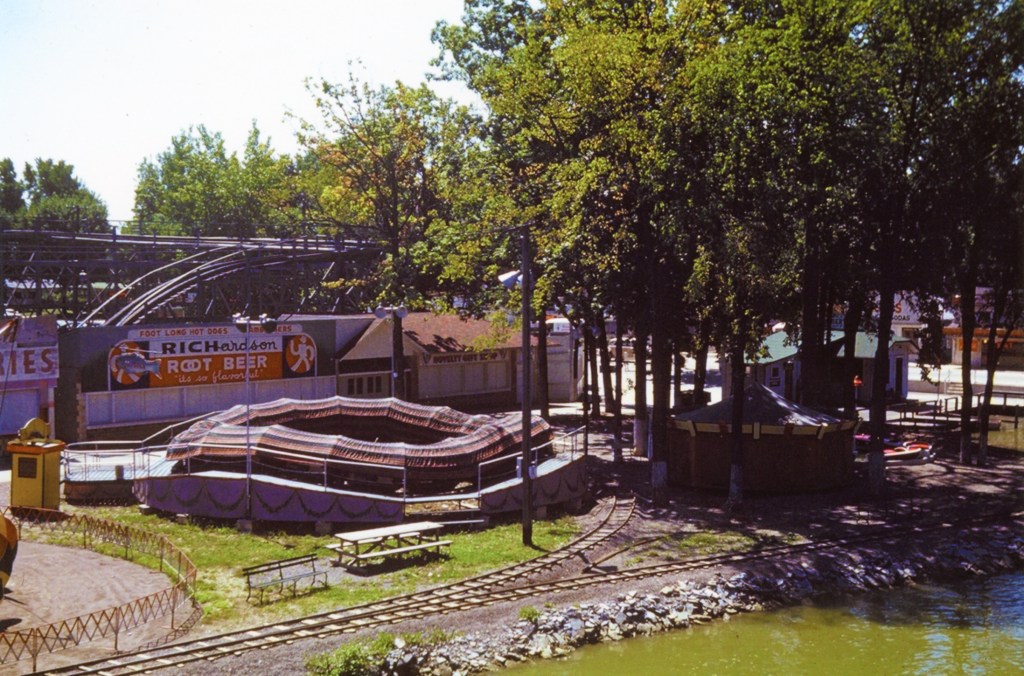
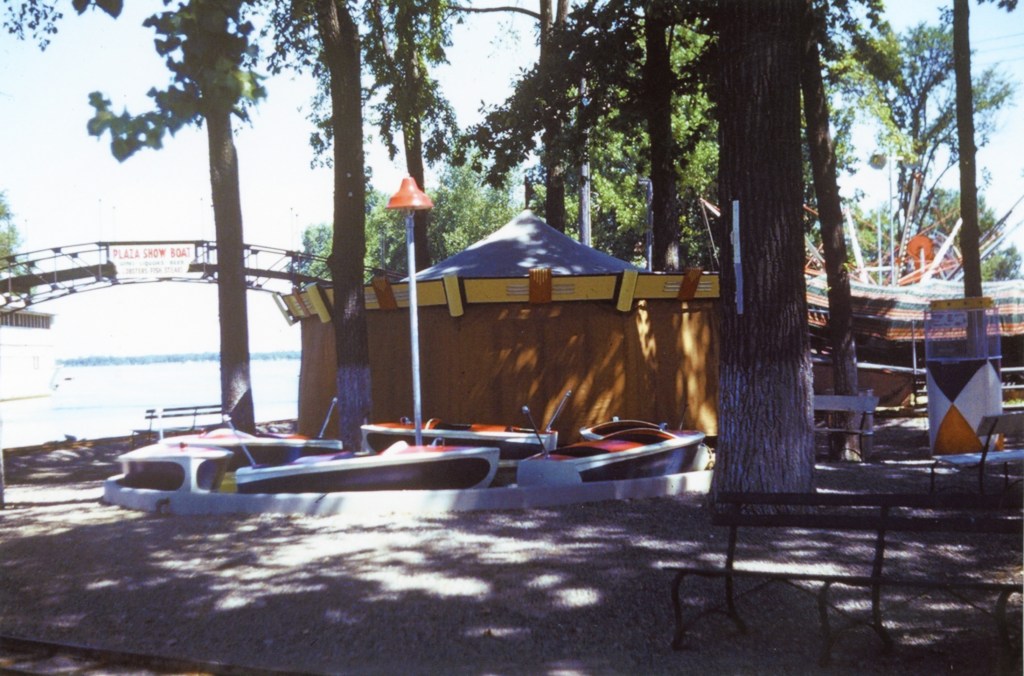

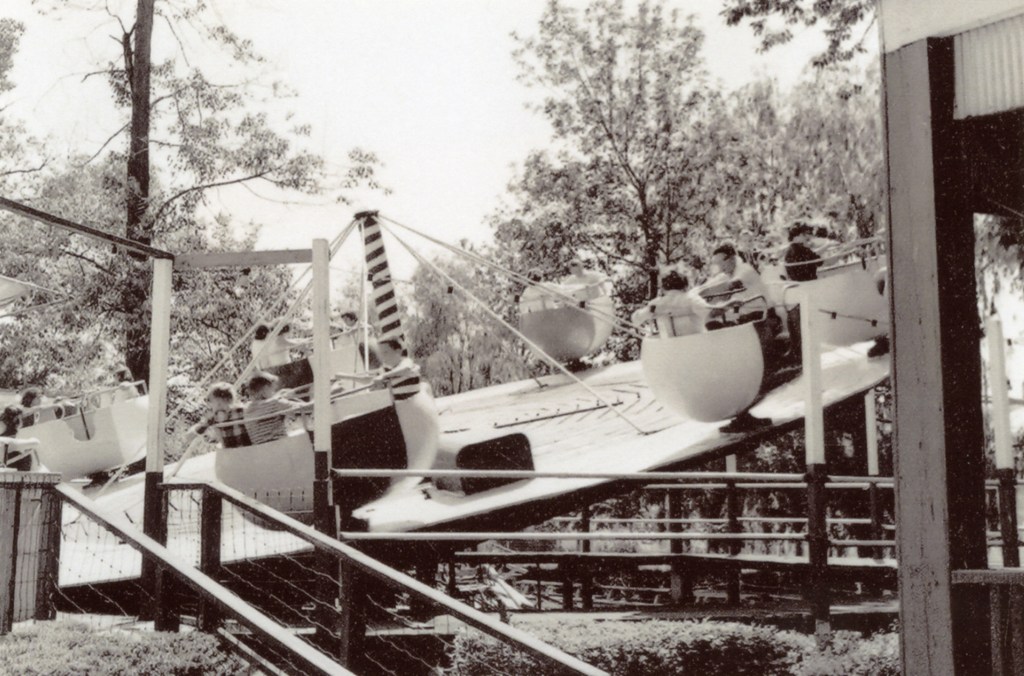
The ride shown in this photograph provided entertainment for the children. Perhaps this photograph was taken in the early morning hours because it does not show the crowds of people that usually visited the Amusement Park.
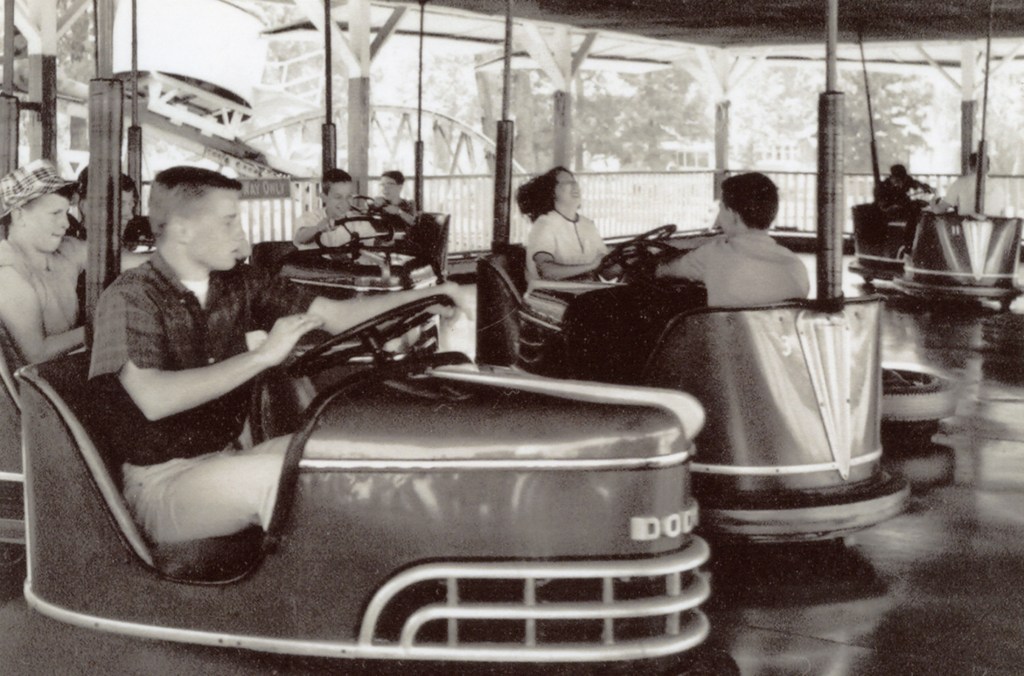
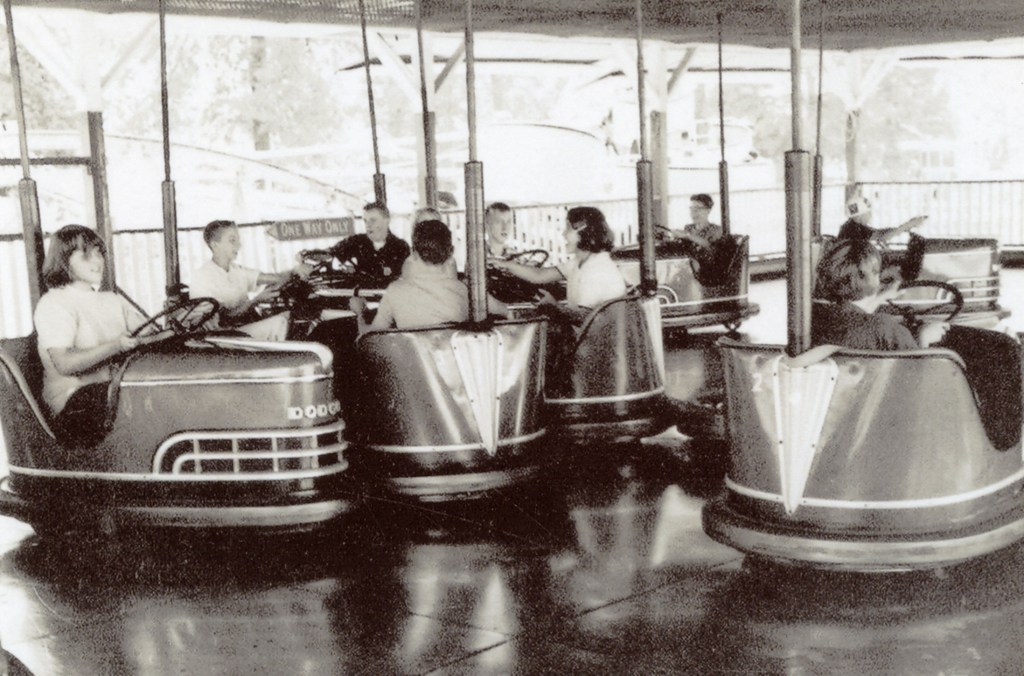

Postmarked 1931, this card shows the arch spanning the entrance of Sandy Beach Amusement Park at the corner of Main Street and Chase Avenue. The archway was removed not long after this photograph was taken, to allow rides to enter the amusement park. Of particular interest are the large number of similar looking automobiles; the driver would have to pay particular attention to where he parked his car so that he could find it back again in this sea of black Fords.
[1] https://www.atlasobscura.com/articles/depression-era-dance-marathons
 Vintage Postcards of Indian Lake, Ohio