Hotel Russells Point

Postcard taken in 1909 by Harry Mansfield, one of the prolific photographers of Indian Lake whose photos were reproduced on postcards for wider distribution.
John Russell, after whom the town of Russells Point is named, was born in 1847 near the eastern shores of the original Indian Lake, on what is now known as Lake Ridge Island. Most of his early life was spent on his parents’ farm just south of what became later O’Connor’s Landing. As John traveled around the now enlarged Lewistown Reservoir, he noticed a tract of government-owned land jutting out into the reservoir on the southern shore. After his marriage, he decided to lease this $800 worth of marshy, forested land located near excellent fishing grounds. The Piqua office of the Bureau of Public Works, which administered the reservoir and surrounding areas, drew up a lease contract for 15 years on October of 1891; the lease provided Russell seven acres of land at a rent of $48 per year. It was here that John Russell built a farmhouse and where farming and fishing operations were centered.
Soon the number of fishermen who traveled by horse over muddy roads under near-impossible conditions, for a fishing vacation at the lake, increased. Often, these travelers needed help or food after they arrived. At first, the Russell family was only too glad to help these weary travelers, but as the first season ended, and the second and third year of increasing numbers of fishermen came and went, the added burden on the family began to be too much for a man trying to raise a growing family and with heavy chores of his own to perform. Doubts about trouble-makers who often accompanied the fishing parties, and parties carried on by vacationers, as well as the ever-increasing number of sportsmen entering the area each year, led John Russell to long for the plain and peaceful farm life he had known as a child. And so, only three years after he signed the lease with the government, John sold the lease in 1894 to James Marshall and Elmer McLaughlin. The new location for the Russell farm was a full day’s drive north of the Point, near the town of Ada. On this farm, John raised his family and where he lived the rest of his life. He died in 1925, at the age of 78. Even though John Russell was one of the first to have realized the growth potential of the lake area, his way of life, and his outlook on raising a family led him to turn his back on the lake.
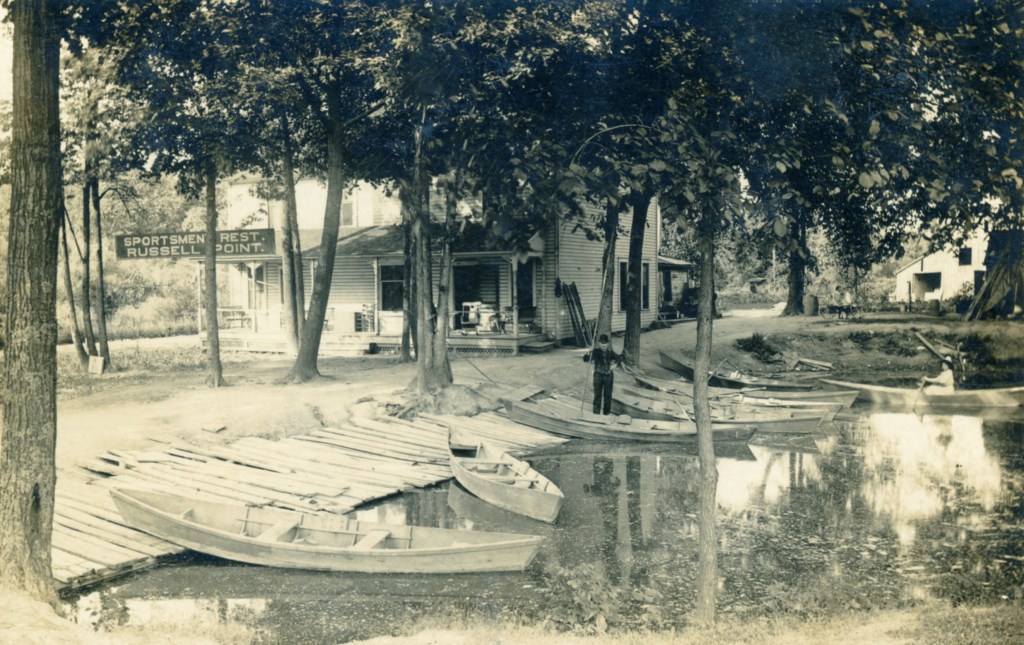
The Hotel Russells Point, previously known as the Sportsmen’s Rest, was on the west side of the harbor, at the site of John Russell’s home. By the time John Russell moved his family there were a dozen families living in the community which was named Russells Point, in honor of its first resident.
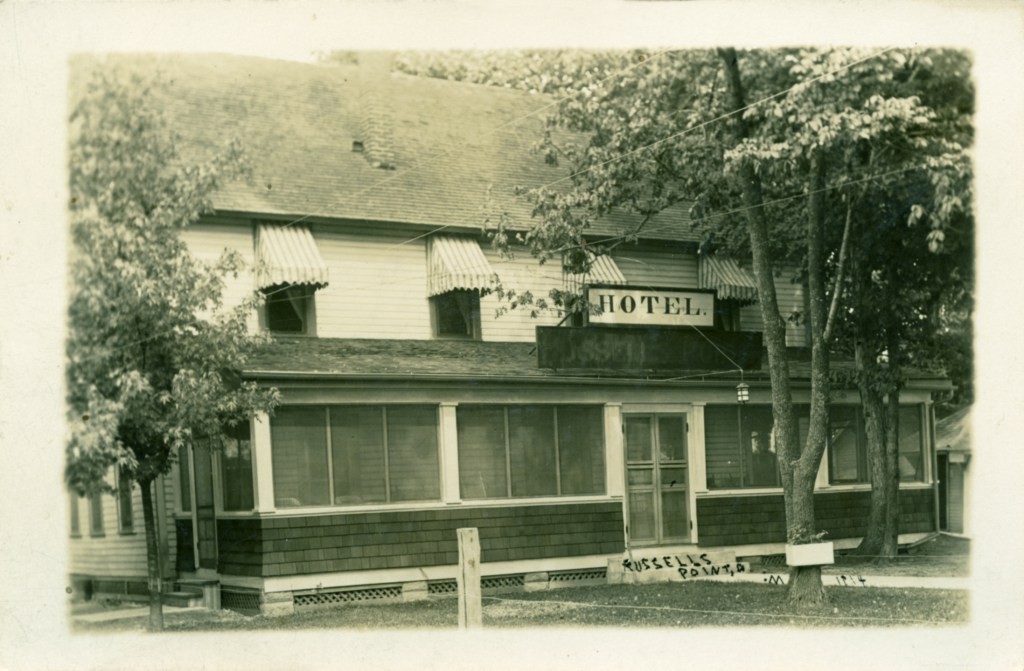
In the spring of 1898, a bill to convert the Lewistown Reservoir into a public park was passed by the state senate and the Indian Lake State Park was established. This boosted the number of visitors to the lake and by the beginning of the twentieth century, the harbor of Russells Point had become a focal point of leisure activity. On the west side of the harbor, the grounds of the existing hotel were expanded to include a boat landing and boat rental, owned by Lafe McElroy. Morris Bundy bought the McElroy property in the early years of the twentieth century and built a few more cottages on what is now Wilgus Street.
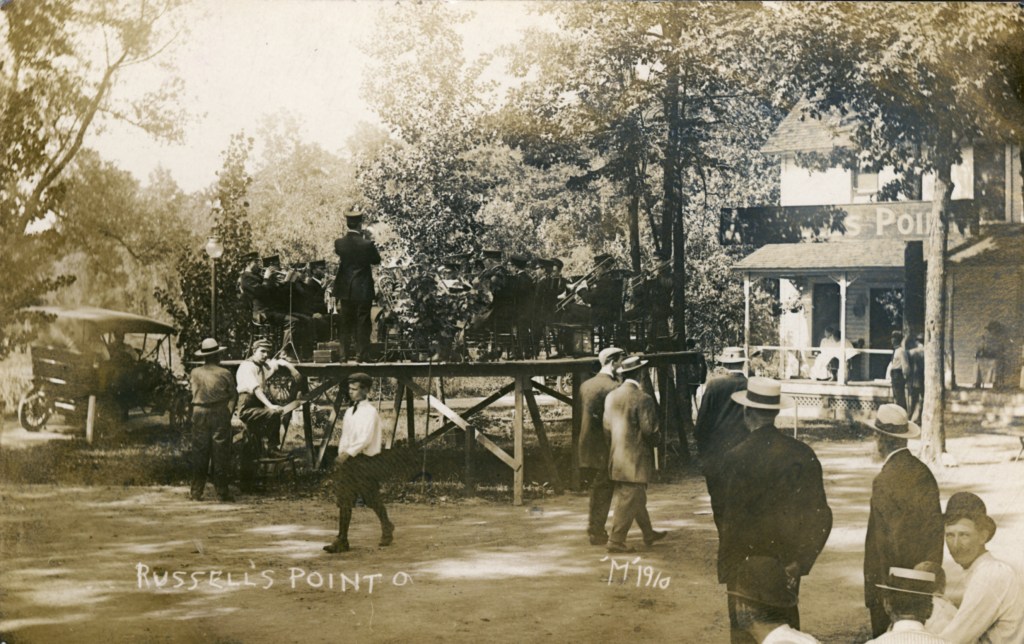
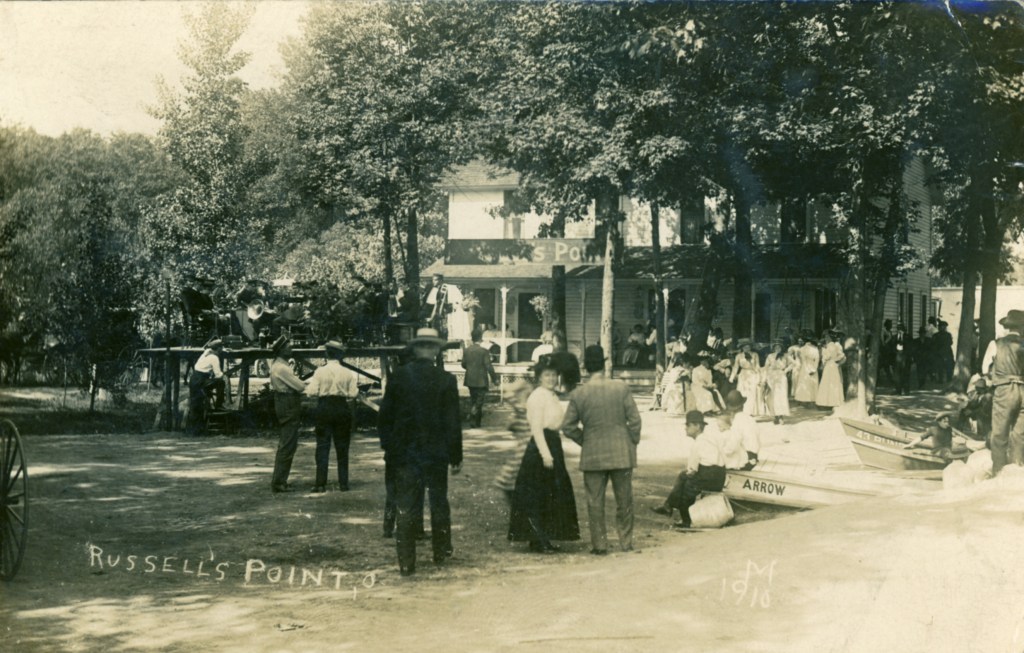
These postcards show people enjoying a band playing on a scaffolding erected in front of the Hotel Russells Point in 1910 – perhaps as part of the annual July 4th celebrations although the absence of American flags suggests this may have been another occasion for celebrating.

Note the barn to the right of the hotel, pictured here in 1910.
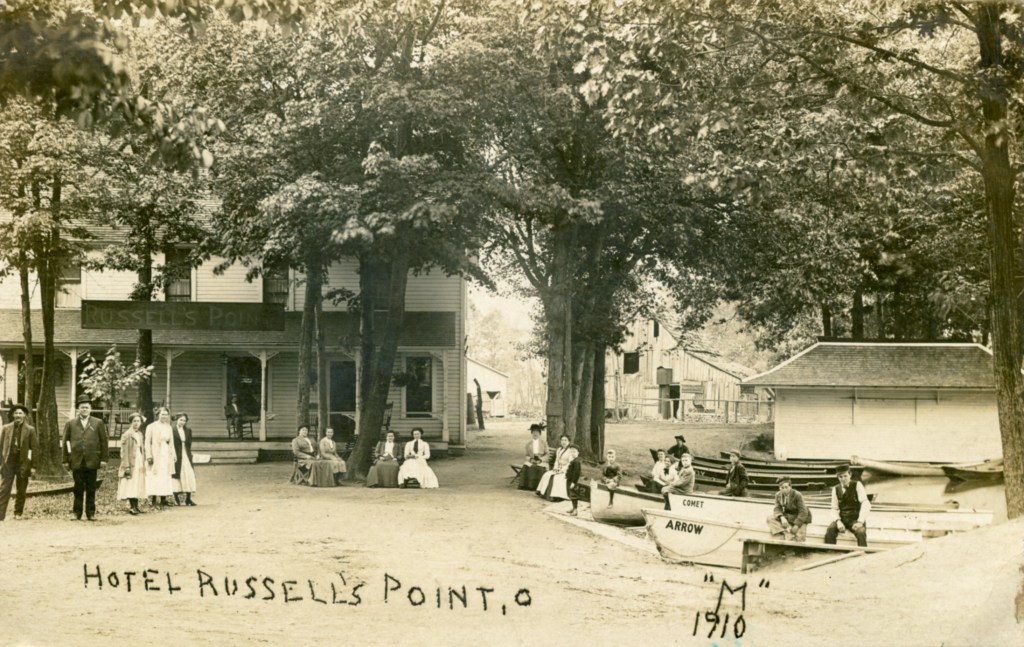
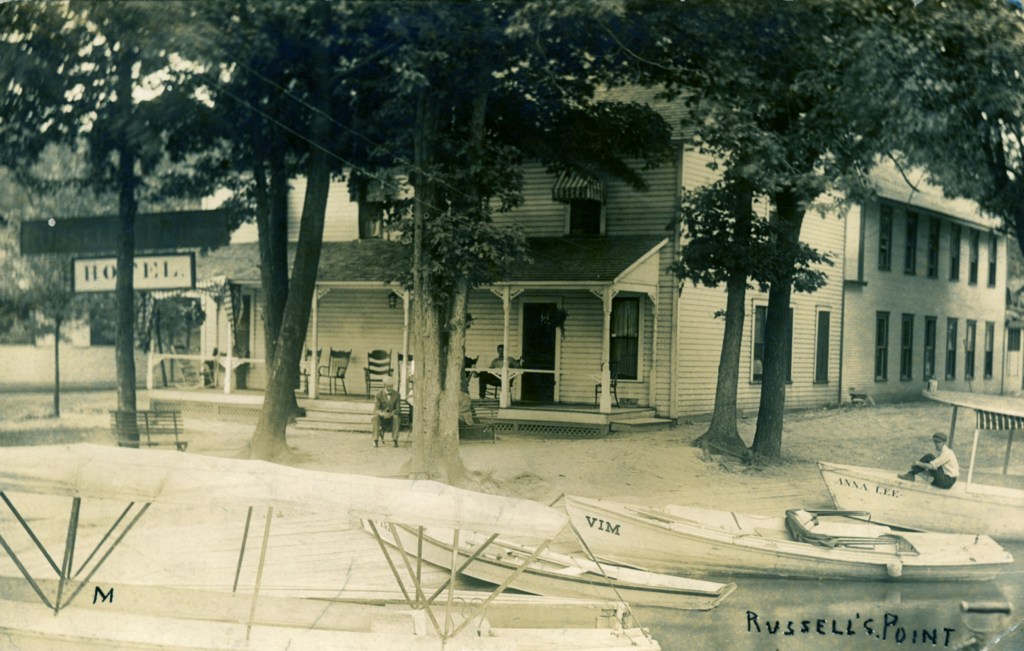
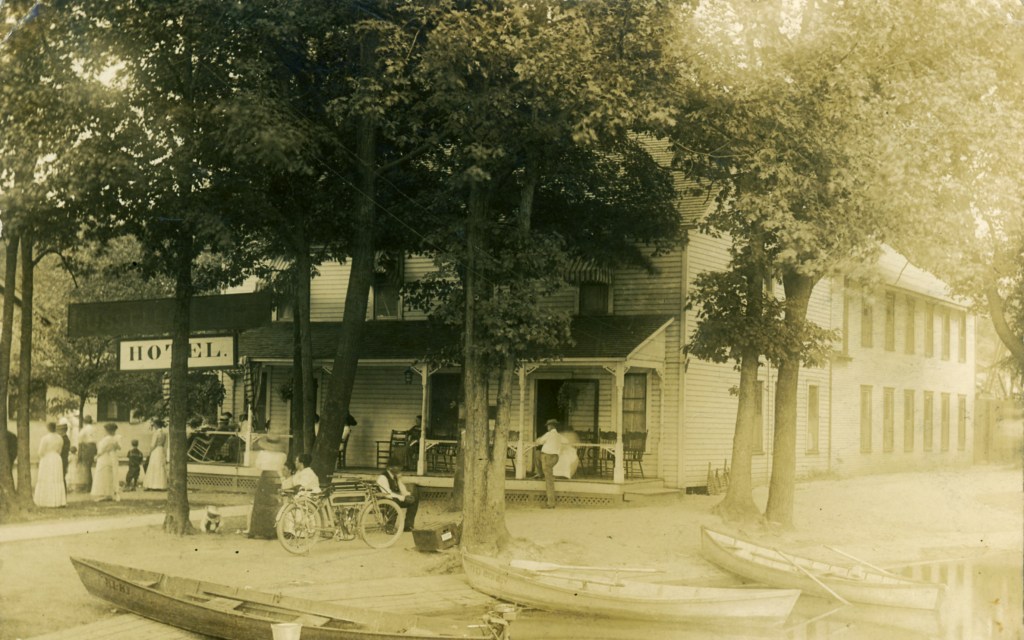
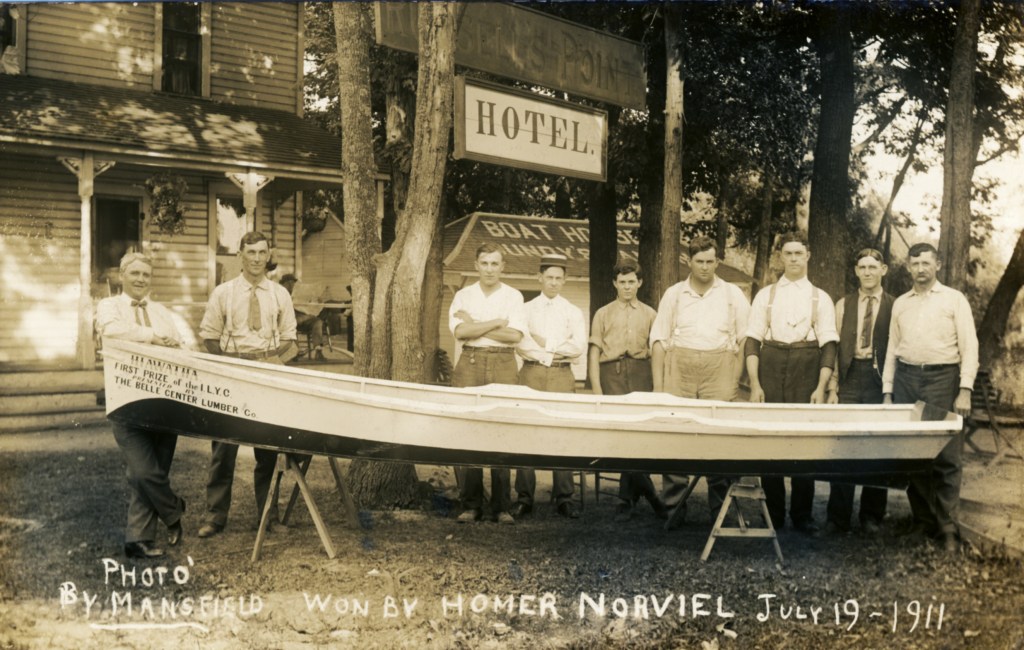
On July 19, 1911, Homer Norviel won the Hiawatha, the First Prize offered by the Indian Lake Yacht Club and presented by the Belle Center Lumber Co. Note the text on the roof of the smaller building in the background “Boat House – Bundy Landing.” This building can also be seen in the upper-left postcard taken a year earlier, without the text on its roof.

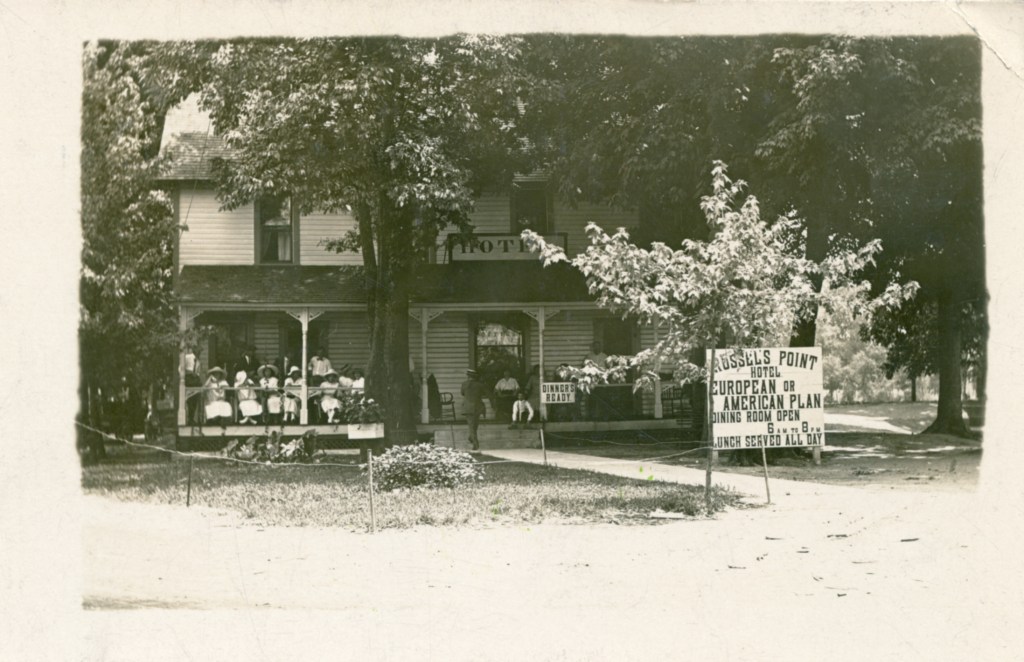
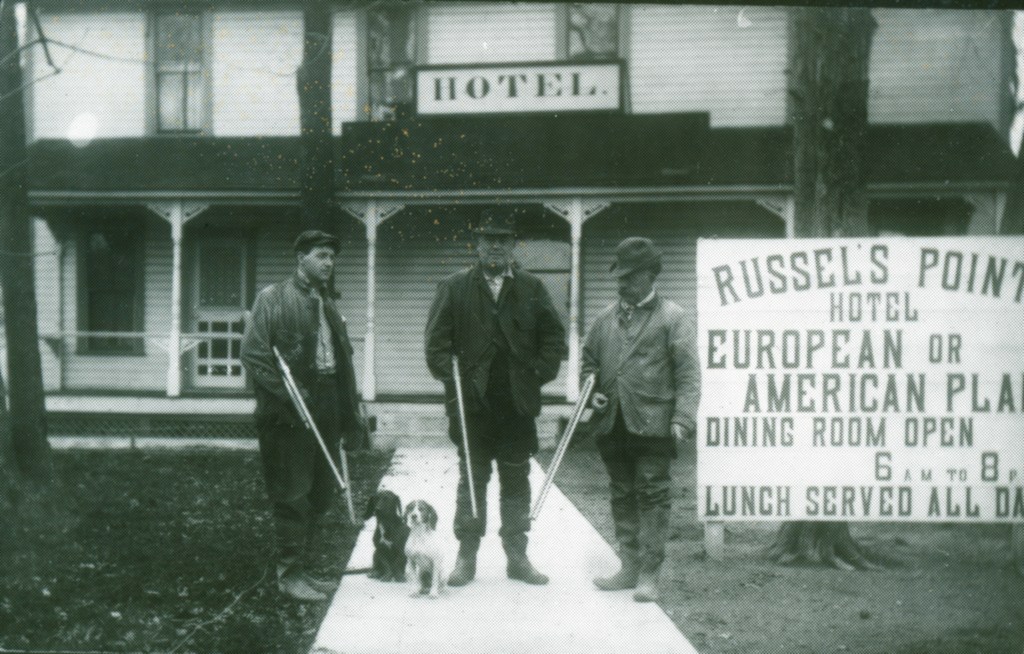
The large sign in front of the hotel lets travelers know that they can choose between the European and the American plan. The European plan means that the rate only covers accommodation and guest will have to pay extra to use the hotel’s dining facilities (also referred to as the “room only” plan.) In the American plan, the rate covers the room plus three main meals per day for the duration of the stay.
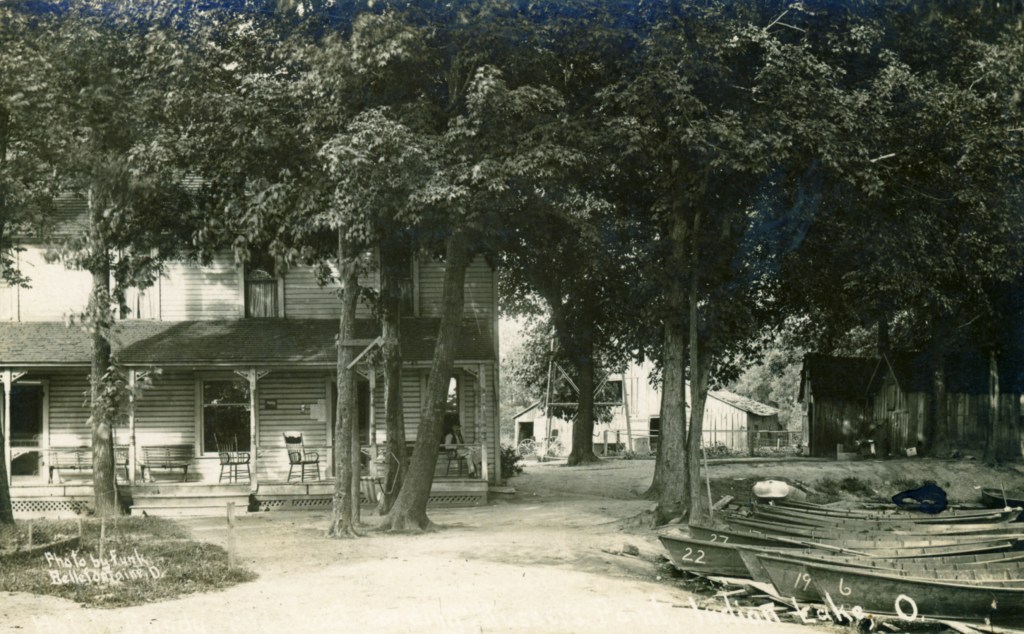
Postcard dated 1913 showing the barn behind the hotel, plus some additional smaller buildings and what appears to be the support structure for a windmill.
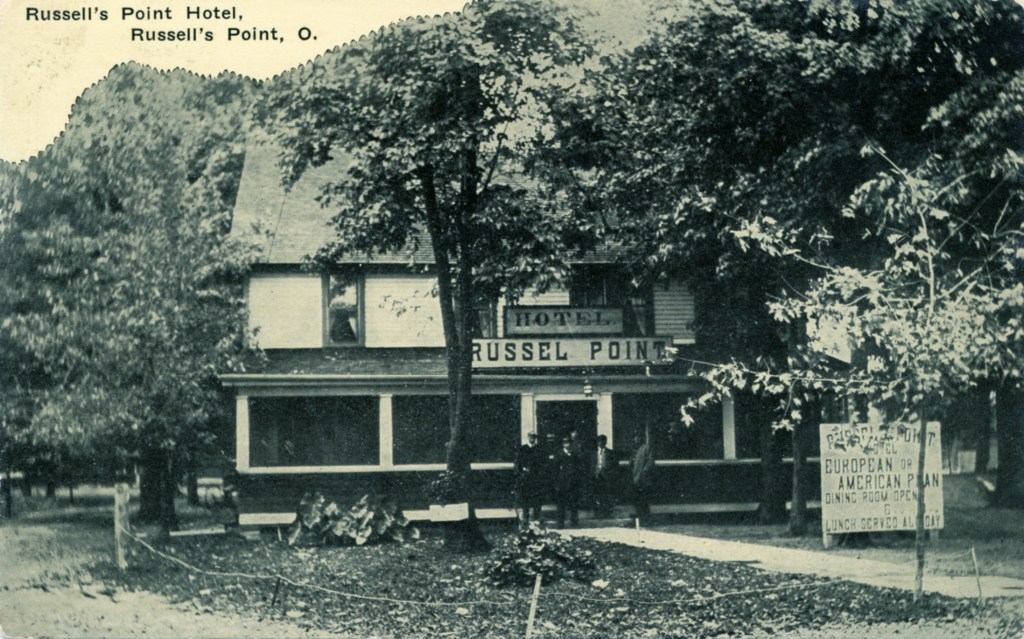
Postcard dated 1915. Note how the upper-left corner has been artificially lightened to allow the text to be visible.
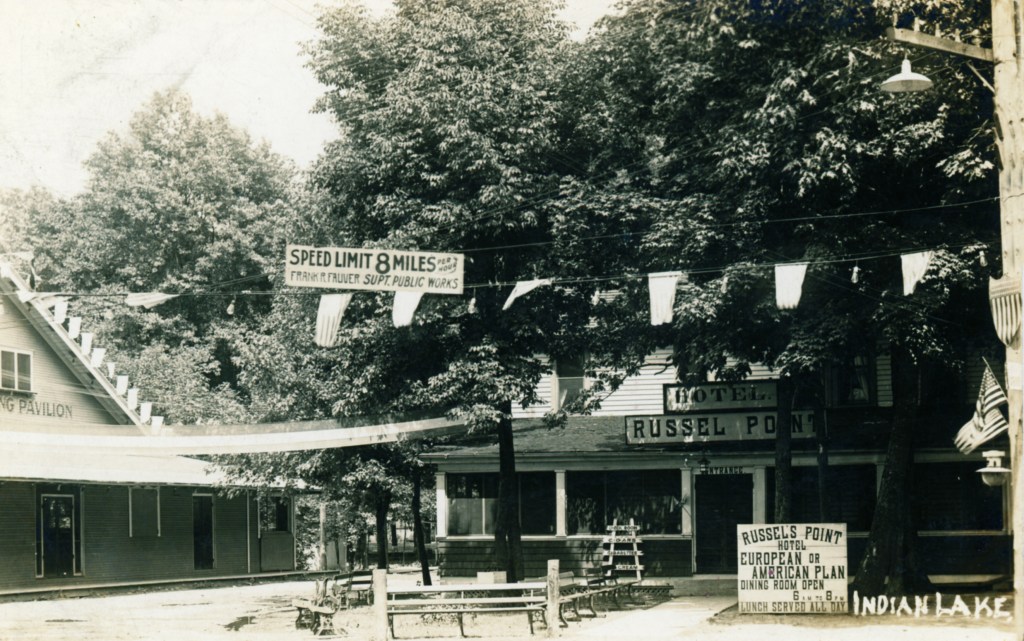
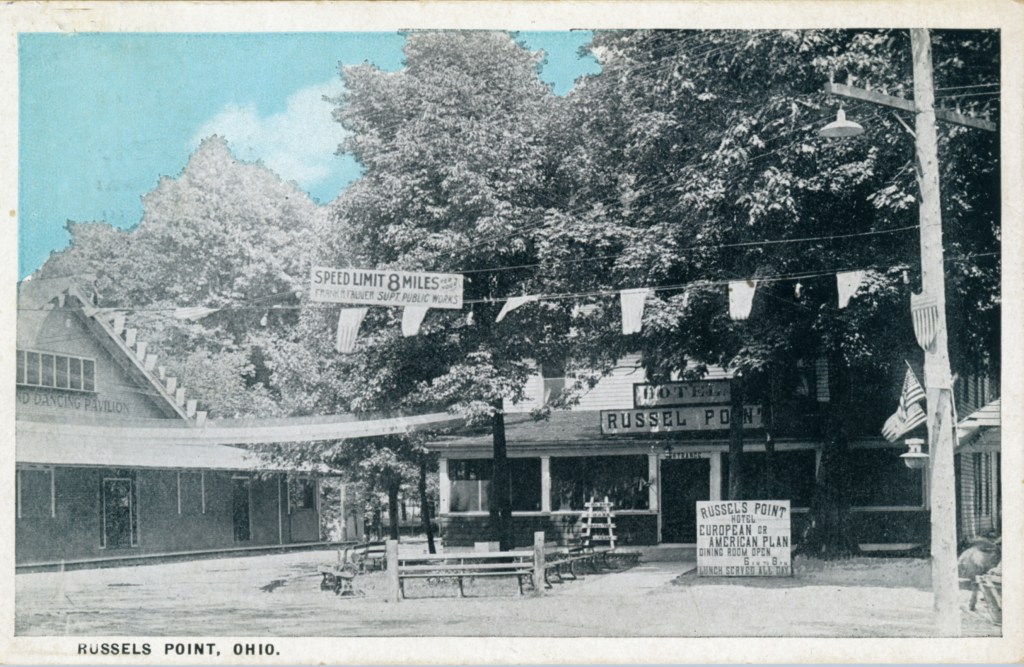
Postcards produced by local photographers, such as the one shown on the left often were used by large commercial companies such as Curt Teich to produce colorized versions of these cards. The card on te left is dated 1920 and the one on the right is dated 1923. Both show the Dreamland Pavillion on the extreme left of the picture, build sometime in the second decade of the twentieth century.

John Marshall first named this the Hotel Russell Point. It was enlarged and operated by Jack Beatley, until the Wilgus family acquired the leases to the west side of the harbor in 1933 and renamed the hotel The Plaza. In December of 1956, George Quatman purchased the hotel and renamed it the San Juan Hotel.
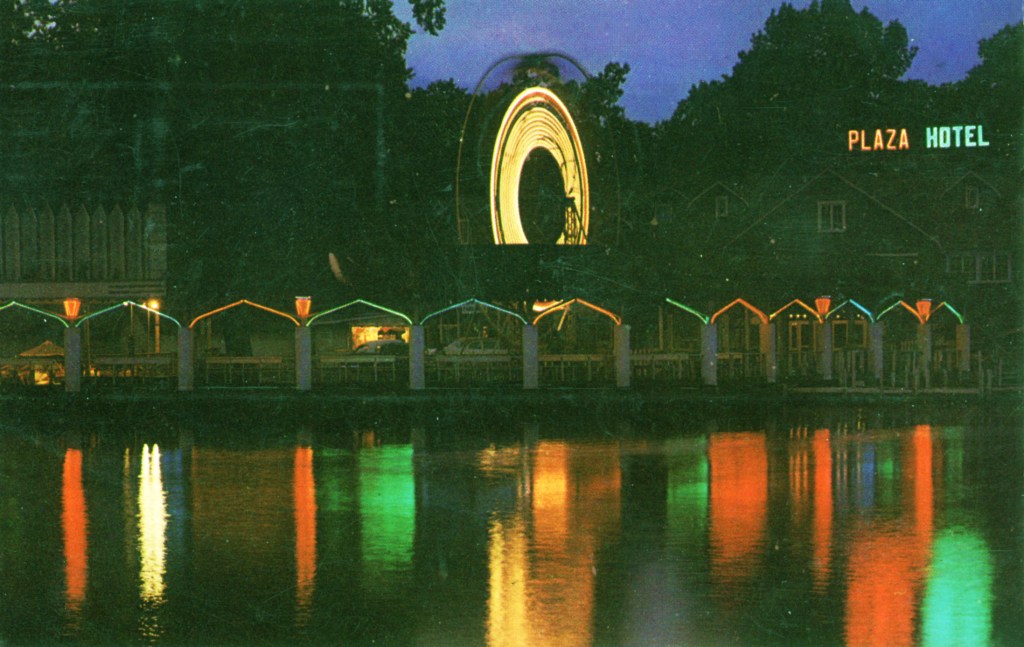
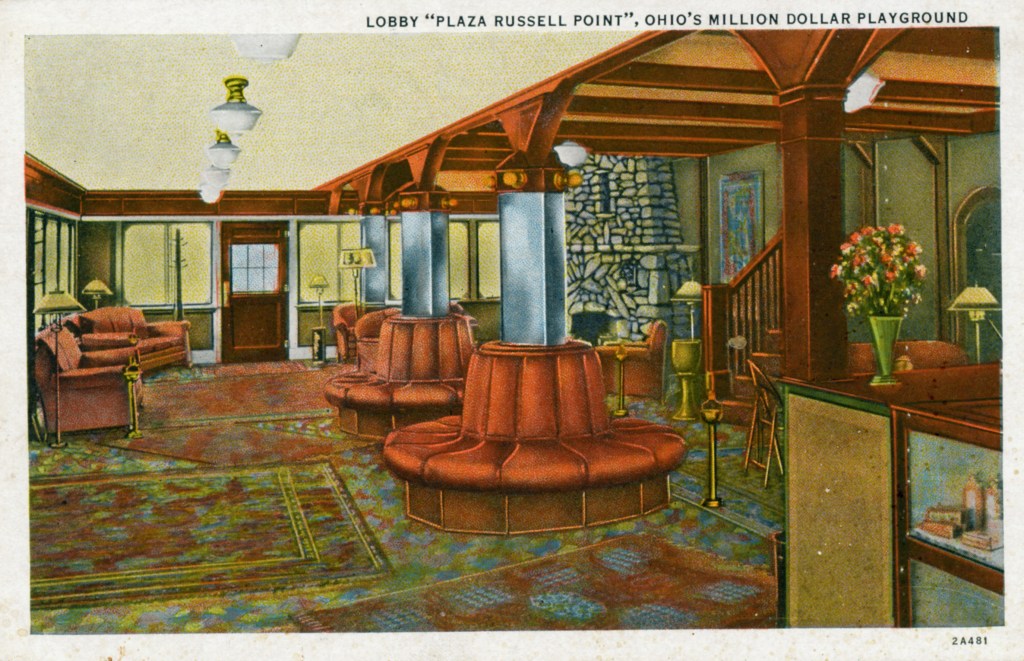

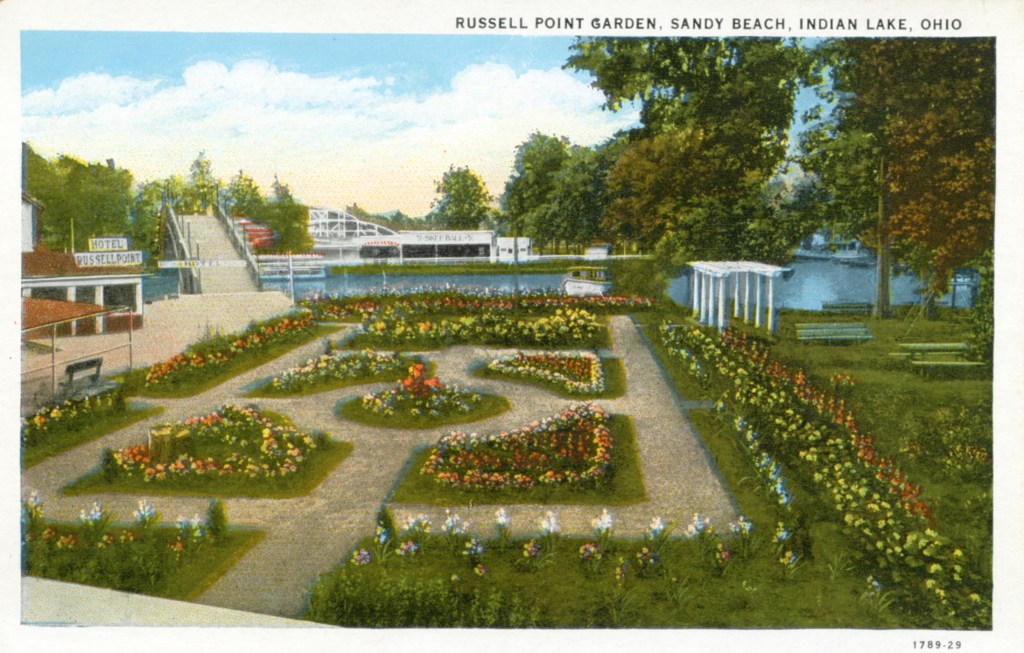
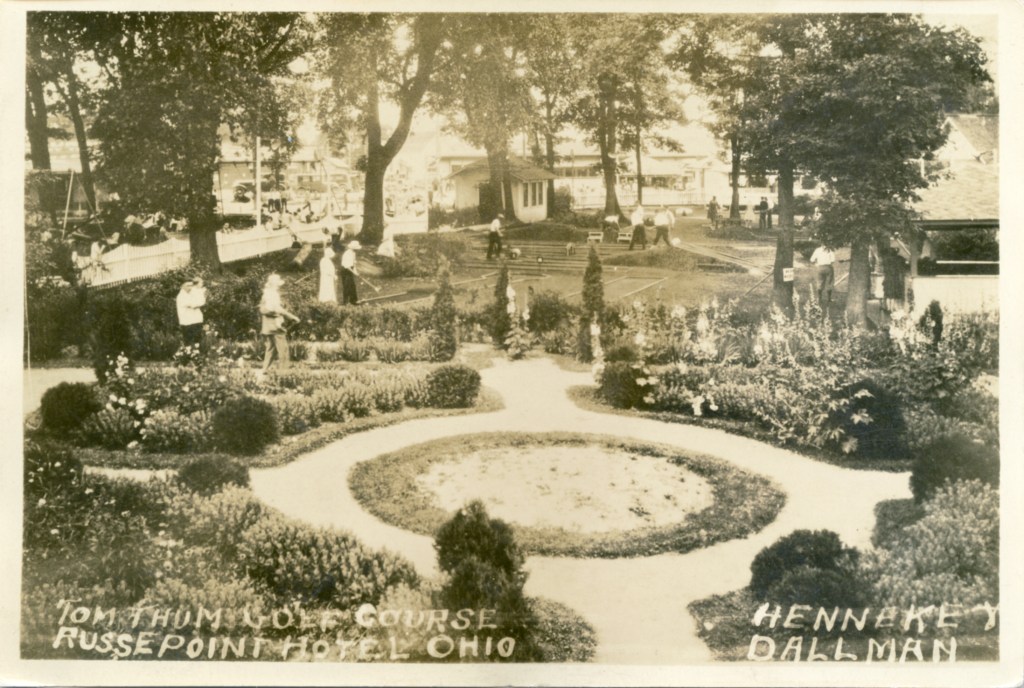
 Vintage Postcards of Indian Lake, Ohio